Last Updated: November 19, 2026
Quick Summary
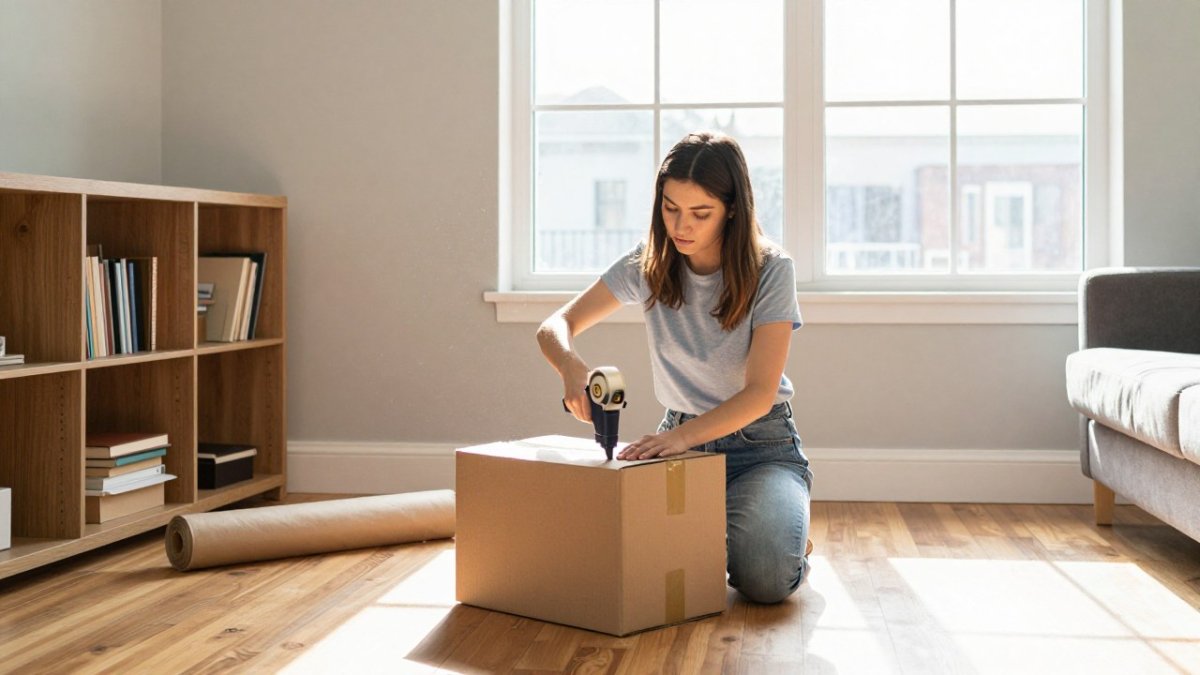
The fastest way to pack an apartment is to pack in order, finishing one room completely before starting the next. Begin with the least-used rooms like guest rooms and storage, and save the kitchen and bathroom for last. Keep a running box list so you always know what is sealed and where it goes.
- Pack rooms you use least first, such as guest rooms and storage areas.
- Save the kitchen and bathroom for last, since you still need them daily.
- Keep a running list of boxes by room and contents.
- Build a first-night box with towels, chargers, toiletries, and medications, and load it last.
- Confirm the building's moving rules, elevator reservation, and loading window before moving day.
Table of Contents
- Why Packing Speed Depends on Order, Not Effort
- Building a Timed Packing Plan for a 2-Day or 3-Day Move
- Gathering Only the Packing Supplies You Need
- Decluttering and Room-by-Room Priority Order
- Packing Tips for Moving in a Hurry
- Packing List for Moving Out for the First Time
- Deciding Whether to Pack Yourself or Book Help
- Booking Help for Your Next Apartment Move
- Frequently Asked Questions
Why Packing Speed Depends on Order, Not Effort
The fastest way to pack an apartment is to pack in the right order, so each room is finished before the next one starts. Most people lose hours by grabbing random items, opening boxes they already closed, and hunting for tape. A clear sequence removes that waste.
Packing speed comes from a few simple habits. Work from the least-used rooms to the most-used. Pack one room fully before starting the next. Keep a single box list so you always know what is sealed and where it goes.
- Pack rooms you use least first, like guest rooms and storage areas
- Save the kitchen and bathroom for last, since you still need them daily
- Keep a running list of boxes by room and contents
- Stop once per room to check nothing important was missed
Building a Timed Packing Plan for a 2-Day or 3-Day Move
A timed plan keeps the move on track because it turns the job of learning how to pack an apartment into a series of finish lines instead of an open-ended chore. For more Bay Area moving tips on timing and scheduling, see our tips page. Start by counting rooms and estimating boxes. Write your estimated box count on a sticky note and cross off boxes as you seal them, a visible count is a practical way to know whether you are ahead or behind.
Set a realistic pace. Packing time varies with the number of items, the fragility of what you own, and how many people are working. Estimate your own pace by timing the first box or two you pack.
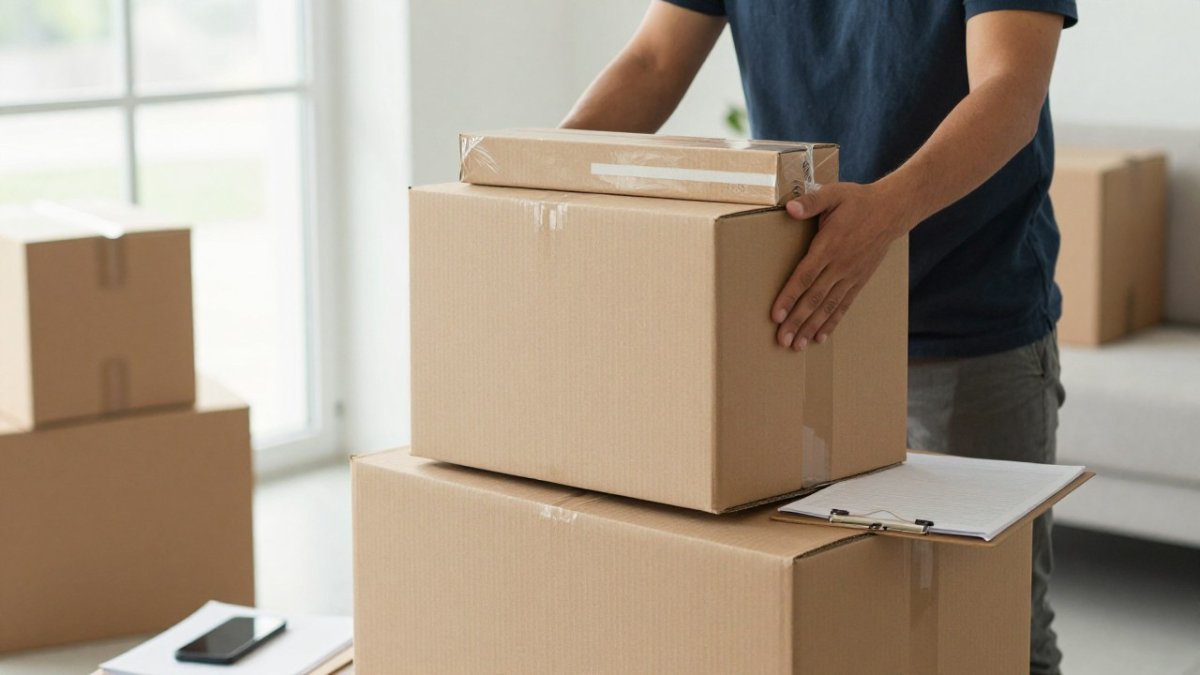
Same-day or 24-hour plan (one person, one-bedroom):
| Time block | Task | Target |
|---|---|---|
| 7:00-8:00 a.m. | Gather supplies, set up tape and markers in each room, declutter closets into keep/donate/trash | Supplies staged; 3-5 bags out the door |
| 8:00-10:00 a.m. | Pack guest room, storage, and hallway closets | 6-8 boxes sealed |
| 10:00 a.m.-12:00 p.m. | Pack living room and office (books in small boxes, electronics in original boxes if kept) | 8-10 boxes sealed |
| 12:00-12:30 p.m. | Break; load packed boxes into the vehicle or staging area by the door | First load ready |
| 12:30-3:00 p.m. | Pack bedrooms: clothes on hangers into wardrobe boxes, linens into large boxes | 8-10 boxes sealed |
| 3:00-5:30 p.m. | Pack kitchen, leaving one counter of daily-use items for the morning | 6-8 boxes sealed |
| 5:30-6:30 p.m. | Pack bathroom and build the first-night box | 3-4 boxes plus essentials box |
| 6:30-7:00 p.m. | Final walkthrough: open every closet and cabinet, label, tape, and stack by the door | All boxes staged |
2-day plan: Day one handles the low-use rooms and the bulk of the living room, office, and bedrooms, roughly 70 percent of the boxes. Day two handles the kitchen, bathroom, and the final walkthrough, then loads. Keep the kitchen and bathroom functional until the morning of day two.
3-day plan: Give each day a theme instead of a room. Day one is decluttering plus the guest room and closets. Day two is living room, office, and bedrooms. Day three is kitchen, bathroom, essentials box, and staging. The extra day is best spent on decluttering and on pre-packing the items you will not touch again, not on slowing the pace.
Watch out: packing the kitchen on day one of a multi-day plan leaves you buying every meal out and hunting for a spoon, which quietly adds hours of errands to the move.
Gathering Only the Packing Supplies You Need
You do not need a full store of supplies to pack fast. Gather only what each room requires. Extra supplies cost time to sort and store.
Buy or collect these basics before you start:
- Medium and large moving boxes, sized for books and linens
- Packing tape and a dispenser
- Markers for labeling
- Bubble wrap or packing paper for fragile items
- Garbage bags for soft items and cleanup
Use towels, sweaters, and bedding to pad dishes and lamps. This saves money and cuts down on wrapping time.
Decluttering and Room-by-Room Priority Order
Decluttering first makes packing faster. Every item you decide to donate or discard is one less box to pack and move. Go through closets and drawers quickly, sorting into keep, donate, and throw away piles.
Then follow a room order based on how hard each room is to pack and how often you use it.
- Guest room and storage spaces
- Closets and hallways
- Living room and office
- Bedrooms
- Kitchen
- Bathroom and essentials
Watch out: packing the kitchen too early leaves you with no way to cook or eat the night before the move. Keep one box of basics out until the last step.
Packing Tips for Moving in a Hurry
When time is short, speed comes from three things: packing in the right unit, protecting the box so it does not need repacking, and clearing the path out of the building before the truck arrives.
Pack in the right unit. Pack heavy items, books, tools, canned goods, small appliances, in small boxes so they stay liftable. Fill empty space in every box with soft items like towels, socks, or pillowcases so contents do not shift and the box does not crush when stacked. Tape the bottom seam and the top seam with two strips each; a box that fails mid-carry costs more time than the tape ever saves.
Use a one-touch rule. Handle each item once. Decide keep, donate, or trash on the spot, then place it directly into its box. Do not build piles to sort later, piles are where hours disappear. Label each box on the top and on one side with the room name and a two- or three-word content note, so whoever carries it knows where it goes without opening it.
Pack a first-night box last and load it last. Towels, chargers, toiletries, a change of clothes, medications, and paper plates go in one clearly marked box that rides with you, not in the truck.
Clear the apartment path before loading day. This is where apartment moves lose the most time and where most packing guides stop short:
- Confirm the building's moving rules in advance, many apartments require a reserved elevator, a certificate of insurance, or a specific move-in/move-out window, and a missed window can push the whole move a day.
- Reserve the freight elevator and the loading zone for a specific block, and confirm whether the loading zone has a time limit.
- Measure the elevator door and the stairwell turn. A sofa or mattress that does not fit turns into an hour of problem-solving on the sidewalk.
- Protect the elevator and hallway with cardboard or moving blankets if the building requires it, and check whether a deposit applies.
- Stage sealed boxes by the door the night before, sorted so the heaviest and least-used boxes load first.
- Walk the route from apartment door to truck once with an empty hand truck to spot tight corners, thresholds, and doors that need to be propped.
Track your pace. Keep an honest count of sealed boxes each hour. If you fall behind, stop organizing and start sealing, perfect organization is a common time-waster in a hurry.
Watch out: stacking boxes in front of the door or in the elevator lobby feels efficient but forces a second move of every box, which can add an hour to a one-bedroom move.
Packing List for Moving Out for the First Time
If this is your first move, a simple list helps you avoid forgotten items. Keep it in your phone so you can check items off as you go.
- Boxes in several sizes
- Tape, markers, and scissors
- Bubble wrap or packing paper
- Garbage bags
- First-night essentials box
- Important documents folder
Deciding Whether to Pack Yourself or Book Help
Packing yourself saves money, but it takes time and energy. Hiring help makes sense when your deadline is tight, you are working alone, or you have heavy furniture and stairs to manage.
A simple rule works well. If packing would take you more than a day, or if lifting is a concern, consider booking help. You can also pack yourself and hire movers only for heavy items.
Curbside Movers offers apartment moving help for Bay Area residents with tight schedules. You can check available moving help and see how it fits your timeline.
Booking Help for Your Next Apartment Move
If you want help on your next move, book early when you can. If you need help quickly, you can book last-minute moving help. You can also find local movers near you and check availability for your date.
Plan your timeline first. Then book help for the heavy lifting, so you can focus on packing the smaller items yourself.
Want a faster move with less stress? Curbside Movers can help you pack up, load, and go with transparent pricing and background-checked professionals. Get a Quote and start planning your move today.
Frequently Asked Questions
What is the fastest way to pack up an apartment for moving?
The fastest method is to pack in priority order rather than by effort: start with rooms and items you use least, such as guest rooms, decorative items and seasonal clothing, then move toward daily-use items in the final hours. Work room by room, keep one box per category, and label each box by room and contents as you seal it. Pack a clearly marked essentials box for the first night so you are not searching through boxes on move day.
Can I pack an apartment in one day?
A one-bedroom apartment can often be packed in a single focused day if you start with decluttering, gather supplies in advance and work through rooms in order. Expect the process to take longer if you have a lot of books, kitchen items or fragile pieces. Set a timed plan with checkpoints every two hours, and keep the last few hours free for the kitchen, bathroom and essentials.
How do you pack an apartment in three days?
Split the work across three days: on day one, declutter and pack rarely used rooms and storage areas; on day two, pack bedrooms, the living room and most of the kitchen; on day three, pack remaining daily-use items, the bathroom and the essentials box. This schedule leaves time to handle items that need extra protection, such as glassware, and avoids the rush of packing everything at the last minute.
What should you pack first when moving?
Pack the items you use least first, which usually means decorative pieces, books, off-season clothing and guest bedding. Leave daily-use items such as toiletries, a few dishes, chargers and work essentials until the end. Keep a separate essentials box for the first night, and seal and label each box as you finish it so the rest of the packing goes faster.
