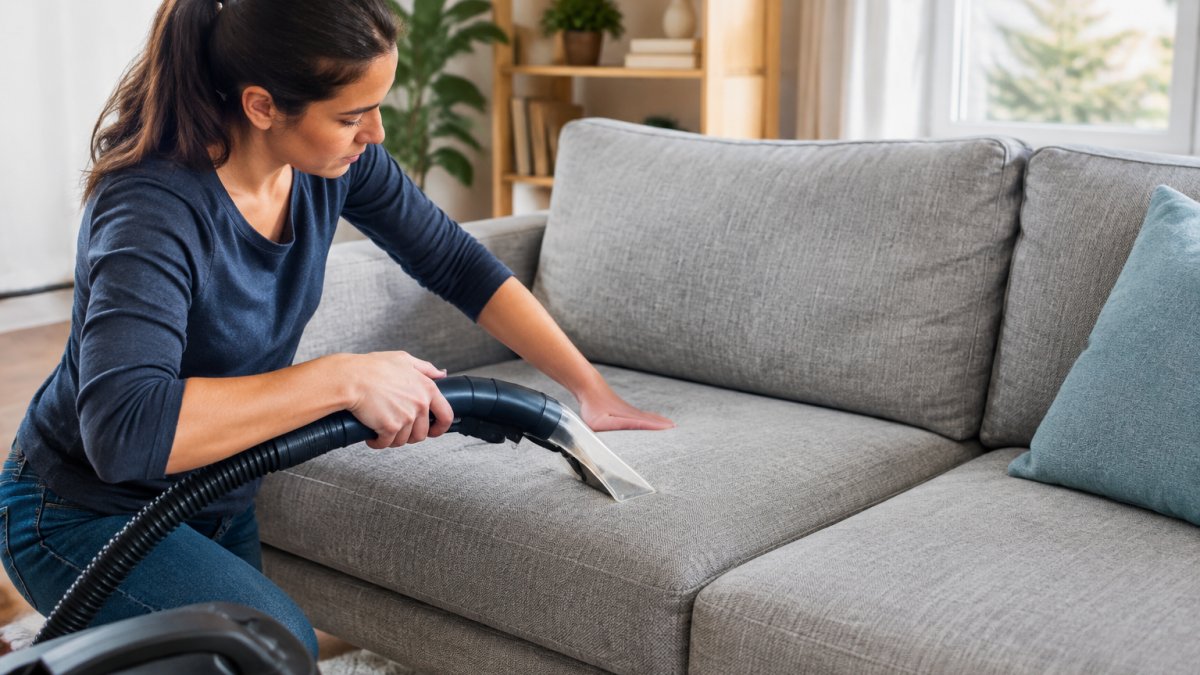
Last Updated: November 12, 2026
Quick Summary
Clean secondhand upholstered furniture by first checking it for pests, mold, and heavy staining before bringing it home. Then vacuum thoroughly, read the care tag to find the safe cleaning method, spot-test any cleaner, and dry the piece completely to prevent mildew.
- Inspect seams, folds, and under cushions for dark specks, eggs, or live insects before bringing the piece inside.
- Vacuum thoroughly before adding any liquid, since loose dirt can turn to mud once wet.
- Find the care tag and follow its code: W for water, S for solvent only, W/S for either, X for vacuum only.
- Always test cleaners on a hidden spot and let it dry completely before treating the whole piece.
- Dry cushions standing on edge with a fan or dehumidifier, since damp cushions can grow mildew within 24 to 48 hours.
Table of Contents
- Inspect Used Upholstered Furniture Before You Bring It Home
- Read the Care Label and Identify the Fabric Type
- Vacuum and Remove Surface Dirt First
- How to Clean Second Hand Upholstered Furniture with Vinegar
- How to Clean Second Hand Upholstered Furniture Stains
- How to Clean an Upholstery Chair by Hand, Step by Step
- Sanitize, Deodorize, and Dry Your Upholstery Completely
- Frequently Asked Questions
Dirty secondhand furniture can look hopeless, but most pieces clean up well with patience and the right method. Whether you found a used couch on a local listing or inherited a chair from a relative, the goal is the same: remove dirt, odor, and stains without damaging the fabric. The cleaning steps below will help you make a used piece usable and comfortable.
Start by checking the piece before it comes near your home. Look for signs of pests, mold, and heavy staining. Then work through the steps in order, from dry cleaning to deep cleaning to drying.
Inspect Used Upholstered Furniture Before You Bring It Home
Inspect the piece in its current location before you arrange pickup. Look under cushions, along seams, and around the frame. Check for tears, sagging, stains, and any musty smell.
Pests matter most. If you have questions about pickup or delivery policies before booking help with a used piece, the FAQ on our moving services covers them. If you see small dark spots, shed skins, or live insects, do not bring the piece inside until you have a plan.
- Check seams and folds for dark specks or eggs
- Look under cushions and along the bottom frame
- Smell the piece for mold or heavy odor
- Note any stains so you know what you are working with
If the item looks heavily infested or moldy, it may be better to leave it behind. If you are picking up a sofa or chair you plan to keep, you can book professional furniture movers online to get it home. Moving a problem piece into your home costs more time and effort than walking away.
Check for Bed Bugs and Pests Before Cleaning
If you find signs of pests, keep the item isolated in a garage or covered area. Do not cross-contaminate your living space.
Read the Care Label and Identify the Fabric Type
Before any liquid touches the upholstery, find the care tag. It is usually sewn into the underside of a cushion, the back of the piece, or the deck under the seat cushions. The tag uses a short code that tells you which cleaning method is safe, and using the wrong one can shrink, bleed, or permanently stain the fabric.
- W: Water-based cleaners are safe. You can use mild soap and water solutions.
- S: Solvent-based cleaners only. Do not use water, it can cause rings, shrinkage, or dye bleeding.
- W/S: Either water or solvent cleaners work. This is the most forgiving code.
- X: Vacuum only. No liquid cleaners of any kind. Use dry methods like baking soda for odor.
If the tag is missing, treat the piece as S or X until you test. A hidden spot, under the seat cushion, on the back deck, or inside a seam allowance, is the only safe place to try a cleaner. Apply a small amount, let it dry completely, and check for color change, stiffness, or rings before proceeding.
Fabric type matters as much as the code. Cotton and linen handle mild soap well but can shrink with too much water. Synthetic blends are often sturdier but can pill if scrubbed. Velvet and wool need low-moisture methods and should be brushed rather than rubbed. Leather is not a fabric, wipe it with a damp cloth and a leather-safe conditioner, never soak it, and avoid vinegar or dish soap, which strip natural oils.
Watch out: A care tag that says "S" does not mean the piece is dirty beyond help, it means water will damage it. If you do not have a solvent-based cleaner on hand, vacuum and deodorize with baking soda instead of improvising with soap and water.
If the tag is gone and you cannot identify the fabric, test every cleaner in an inconspicuous spot and wait a full 24 hours before treating the whole piece. Some damage, like dye bleeding or shrinkage, only shows up after the fabric dries.
The care tag code tells you which cleaning method is safe, so check it before using any liquid.
| Code | Meaning | What to use |
|---|---|---|
| W | Water-based cleaning | Mild soap and water solutions |
| S | Solvent-based cleaning only | No water; water can cause rings or shrinkage |
| W/S | Either water or solvent | Most forgiving code |
| X | Vacuum only | No liquid; use baking soda for odor |
Vacuum and Remove Surface Dirt First
Vacuuming is the most important first step. Loose dust and debris can turn into mud once you add liquid, so remove as much as you can before cleaning.
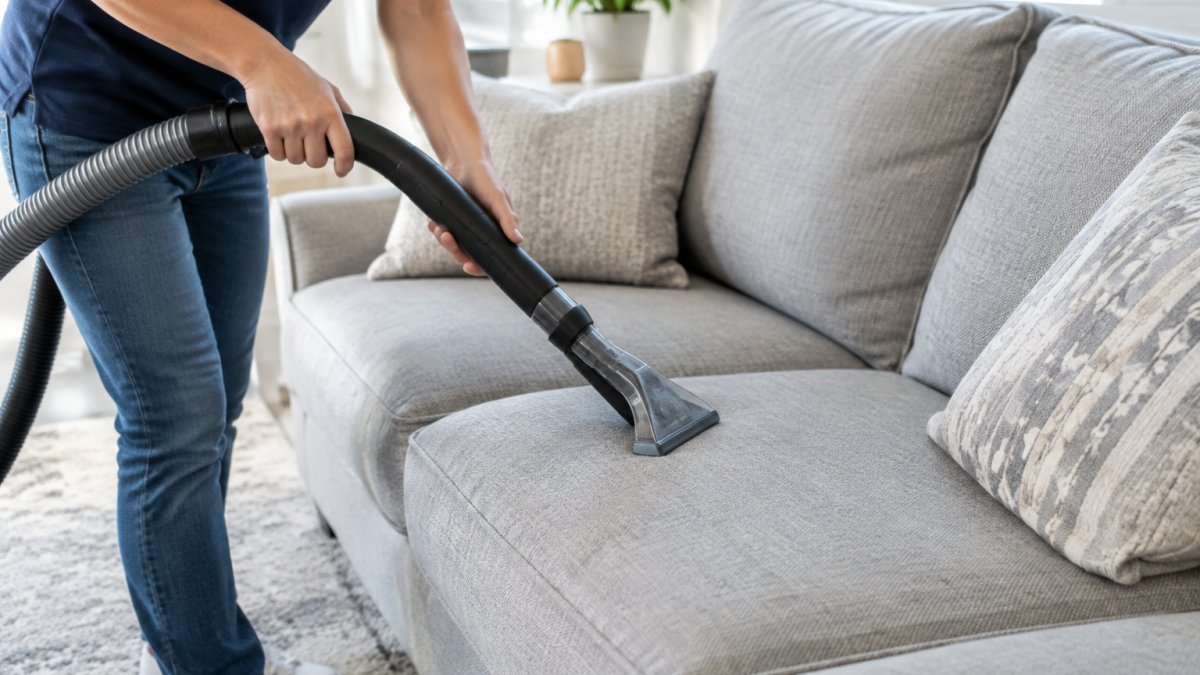
Use an upholstery attachment and vacuum in one direction. Work into seams, crevices, and the gaps between cushions. Remove cushions and vacuum underneath them.
- Use the upholstery brush attachment on a low to medium setting
- Vacuum seams, buttons, and crevices
- Vacuum the underside and the back of the piece
- Empty the vacuum or change the bag before you finish
Vacuuming also helps reveal stains you might have missed, so you know where to focus later.
How to Clean Second Hand Upholstered Furniture with Vinegar
White vinegar is a common choice for light cleaning and odor control. Mix equal parts white vinegar and water in a spray bottle. Test the mix on a hidden spot first and let it dry completely.
Lightly mist the fabric. Do not soak it. Blot with a clean white cloth and work in small sections. Let the fabric air dry before you judge the result.
Vinegar has a strong smell while it dries, but that smell fades. It is best for general freshening, not for heavy stains or greasy marks. Avoid using vinegar on leather or on fabrics whose care label says solvent only.
How to Clean Second Hand Upholstered Furniture Stains
Stains need a targeted approach. Treat each one as soon as you find it, and test your cleaner first on a hidden area.
For water-based stains, use a small amount of mild dish soap mixed with warm water. Dab gently with a cloth. For oil-based stains, sprinkle baking soda over the spot, let it sit, then vacuum it up before using any liquid.
- Blot stains, do not rub them
- Work from the outside edge inward
- Use a clean cloth for each pass
- Stop if the fabric starts to bleed color
Some stains will not come out completely. Knowing when to stop saves the fabric from damage.
How to Clean an Upholstery Chair by Hand, Step by Step
A hand cleaning method works well for a single chair or small piece. Follow these steps to clean it carefully.
- Vacuum first. Remove all loose dirt and debris.
- Test your cleaner. Use a hidden spot and wait for it to dry.
- Mix a mild soap solution. Use a small amount of mild dish soap in warm water.
- Apply with a cloth. Dampen the cloth, wring it out well, and wipe in one direction.
- Rinse with a damp cloth. Remove any soap residue.
- Let it dry. Keep the chair in a ventilated spot with air circulating.
Avoid soaking the fabric. Too much water can cause mildew and weaken the frame.
Sanitize, Deodorize, and Dry Your Upholstery Completely
Sanitizing, deodorizing, and drying are three different jobs, and treating them as one step is how secondhand furniture ends up musty or still germy. Cleaning removes visible dirt. Sanitizing reduces bacteria on a surface.
For odor, start dry. Sprinkle baking soda over the fabric, let it sit for several hours or overnight, then vacuum it up with the upholstery attachment. Baking soda absorbs odor molecules rather than masking them. For deeper odors, a 50/50 mix of white vinegar and water misted lightly and allowed to air dry can help, but vinegar is not a disinfectant, it is a mild acid that breaks down some residue and freshens surface smell.
For sanitizing, use a product labeled for fabric and follow the dwell time on the label, usually the wet contact time is what does the work, not the spray itself. Do not mix cleaning products, and keep the room ventilated. A common pattern is that readers spray and immediately wipe, which defeats the sanitizer's contact time.
Drying is where most secondhand upholstery fails. A damp cushion can grow mildew within 24 to 48 hours in a warm, humid room. Pull removable cushions out and stand them on edge so air reaches all sides. Run a fan or a dehumidifier in the room, and open windows if the weather allows. Direct sunlight helps but can fade some fabrics, so limit sun exposure to a few hours and rotate the piece. Do not put the cushions back on the frame until both the cushion and the deck underneath are dry to the touch, press the seam with a paper towel; if it comes away damp, keep drying.
Watch out: Musty smell that returns a day or two after drying usually means moisture is trapped in the cushion foam or the frame, not that the surface needs more cleaner. Re-wetting a damp piece makes mildew worse. If the smell persists after a full dry cycle, the foam may need to be replaced or the piece may not be salvageable.
If you find stains and odors you cannot remove after a proper dry cycle, or if the piece has pest evidence you cannot resolve, consider professional help before you invest more time. For pieces that pass inspection and dry fully, the cleaning steps above will make most secondhand upholstery usable and comfortable.
BUTTON: Get a Quote CARD_TITLE: Need help moving clean furniture home? CARD_TEXT: Curbside Movers handles furniture pickups and small moves across the Bay Area with transparent, upfront pricing.
Frequently Asked Questions
Can I use Dawn dish soap to clean upholstery?
A small amount of mild dish soap mixed with warm water can lift light surface dirt from many upholstery fabrics. Mix only a few drops into a bowl of water, whip it into a light foam, and apply just the suds with a damp cloth. Always test the cleaner on a hidden area first, because some fabrics can water-spot or fade. Avoid soaking the fabric, and blot away any soap residue with a clean damp cloth so it does not attract dirt or leave a stiff patch once dry.
Is it sanitary to buy a used couch?
A used couch can be a safe purchase when you inspect it carefully and clean it thoroughly before use. Check seams, folds, and under cushions for bed bugs, stains, and musty odors, and avoid pieces with live insects or heavy mildew. Vacuum the piece thoroughly, clean the fabric using a method suited to its care label, and let it dry completely in ventilated air. If you find signs of pests or persistent mold, it is safer to decline the item or hire a professional.
How do you disinfect a secondhand sofa?
Cleaning removes dirt and stains, while sanitizing or disinfecting reduces germs, and cleaning usually comes first. After vacuuming and cleaning, you can use a disinfectant labeled for fabric and approved for use on upholstery, following the label's contact time. Test an inconspicuous spot first and ventilate the room well while you work. Never mix cleaning products, and let the sofa air dry fully in sunlight or a well-ventilated room before using it.
How do you clean secondhand upholstery with vinegar?
Mix equal parts white vinegar and water in a spray bottle, then lightly mist a small hidden area and check for color change before continuing. Apply the solution with a clean cloth rather than soaking the fabric, and blot the area gently. Wipe away any residue with a cloth dampened with plain water, then let the upholstery dry completely. Vinegar can help with odors and light soiling, but it is not appropriate for every fabric, so always confirm compatibility first.
