Last Updated: November 10, 2026
Quick Summary
To get your moving deposit refunded, document the unit's condition with a dated move-out inspection, photos, and video, then provide your forwarding address in writing and request an itemized statement of deductions. If your landlord misses the state deadline or withholds unfairly, send a written demand letter and escalate to small claims court.
- Film a room-by-room move-out walk-through with your landlord present if possible.
- Give your forwarding address in writing and note the date you returned keys.
- Send a demand letter by certified mail only after the statutory deadline passes.
- Compare each deduction on the itemized statement against your dated move-out photos.
- Keep original image files and back them up to cloud storage the same day.
Table of Contents
- Start With a Move-Out Inspection Checklist
- How Long to Get Security Deposit Back
- Use a Security Deposit Demand Letter Template
- Understand Your Tenant Rights and Landlord Obligations
- Document the Rental Unit Condition Before You Move
- What to Do If Your Landlord Withholds Your Moving Deposit
- Book Your Move and Protect Your Deposit
- Frequently Asked Questions
Start With a Move-Out Inspection Checklist
Getting your moving deposit refunded starts long before you hand back the keys.
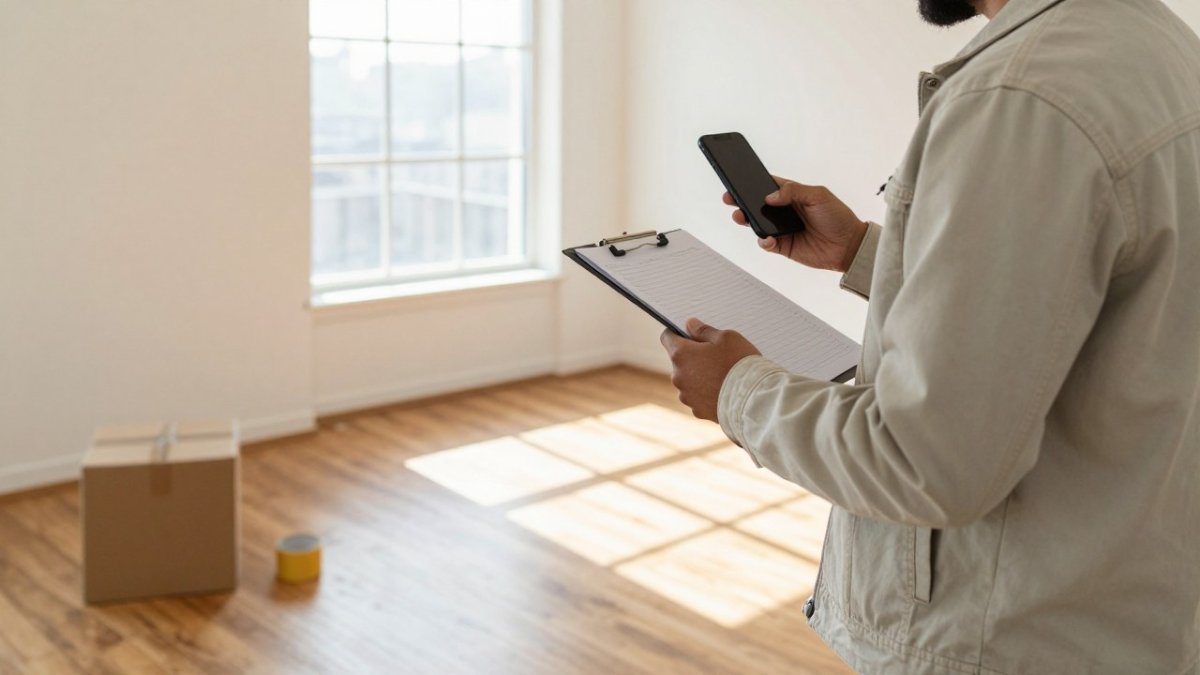
A move-out inspection is a room-by-room walk-through recording the unit's condition before you return possession, creating proof that supports your security deposit refund if a landlord disputes property damage.
Here is a simple move-out inspection checklist you can copy:
- Walk every room with your phone camera rolling video
- Photograph walls, floors, ceilings, and doors in each room
- Open closets, cabinets, and appliances and film inside
Do this with the landlord present if you can. A joint walk-through signed by both sides is the strongest proof of condition you can hold.
What to Photograph and Record
Focus on the spots landlords check first. That means walls, carpets, blinds, appliance interiors, and bathroom grout.
Take wide shots, then close-ups. Keep the date and time visible on every file.
Back everything up to cloud storage the same day. A digital evidence folder organized by room can make a security deposit dispute easier to document.
Normal Wear and Tear vs. Damage
Normal wear and tear is deterioration from ordinary use. Property damage is harm beyond what everyday living causes. The difference decides most security deposit withholding cases.
| Item | Normal Wear and Tear | Property Damage |
|---|---|---|
| Walls | Small nail holes, faded paint | Large holes, crayon marks, unapproved paint colors |
| Carpet | Worn paths, minor fading | Burns, pet stains, tears |
| Floors | Light scuffs | Deep gouges, water damage |
| Appliances | Worn seals | Broken racks, burnt elements |
| Bathroom | Dull grout | Cracked tiles, mold from neglect |
Landlord-tenant law generally distinguishes between routine wear and damage beyond normal use; check your state's rules for specifics.
How Long to Get Security Deposit Back
Most states set a statutory deadline for returning a security deposit. Deadlines vary by state, so check your state's landlord-tenant statute directly.
Because the rules vary so much, check your state's landlord-tenant statute directly. The U.S. Department of Housing and Urban Development tenant resources offers starting guidance, and your state attorney general's office publishes the exact deadline that applies to you.
Three things speed up your security deposit return:
- Give your forwarding address in writing, not just verbally
- Hand over the keys and note the date
- Ask for the itemized statement of deductions in writing
If the deadline passes with no word, you have grounds to send a written notice demanding payment.
Use a Security Deposit Demand Letter Template
A security deposit demand letter template is a formal written request for your rental deposit back, creating a paper trail for small claims court.
Consider sending it by certified mail with a return receipt requested, and keep a copy of the letter and the receipt for your records.
[Your Name] [Your Address] [City, State, ZIP] [Date]
[Landlord Name] [Landlord Address]
Re: Demand for Return of Security Deposit, [Rental Address]
Dear [Landlord Name],
I vacated the rental unit at [address] on [date] and returned all keys.
What to Include in Your Letter
Keep it short and factual: the move-out date, your forwarding address, the deposit amount, and the applicable deadline.
Attach a photo log if you have one. Mention your proof of condition without threatening.
Watch out: do not send the letter before the statutory deadline has passed. An early demand gives the landlord an easy reply that the clock is still running.
Delivery Methods That Create a Record
How you send the letter matters as much as what it says. A layered approach to delivery can help:
- Certified mail with return receipt, a common way to document delivery
- Email with read receipt, fast, and creates a timestamped copy
- Hand delivery with a witness, useful if the landlord is local and evasive
Keep the tracking number, receipt card, and a scanned copy of the signed letter in one folder. If you end up in small claims court, that folder is your exhibit.
State-Specific Deadlines to Cite
Deadlines vary widely, so look up your state's statute before you fill in the blank. A few examples of how much the rules differ:
| State | Return Deadline | Penalty for Wrongful Withholding |
|---|---|---|
| California | 21 days | Up to 2x the deposit |
| Texas | 30 days | Up to $100 plus 3x the withheld amount |
| New York | 14 days | Up to 2x the deposit |
| Florida | 15-30 days | Forfeits right to withhold |
| Illinois | 30-45 days | Up to 2x the deposit plus attorney fees |
Return Deadline
Confirm the current text of your state's statute, because legislatures amend these rules. Your state attorney general's office publishes the exact deadline and penalty that apply to you.
Downloadable Template Library
A small template library you can copy and adapt can be useful:
- Move-out checklist, room-by-room, with a column for photo file names
- Demand letter, the version above, with bracketed fields for your state statute
- Follow-up letter, for when the first demand gets no response
Save each as a plain text or document file and fill in the brackets. Having the follow-up letter ready keeps the pressure on without an angry phone call.
Understand Your Tenant Rights and Landlord Obligations
Tenant rights and landlord obligations around deposits are set by state law, not by the lease agreement alone. A lease clause cannot override a state statutory deadline.
Your landlord generally must (rules vary by state):
- Return the security deposit refund on time
- Provide an itemized statement of every deduction
- Charge only for damage beyond normal wear and tear
You generally must:
- Leave the rental unit condition clean and as agreed
- Give proper written notice before moving out
- Provide a forwarding address
Before you hire anyone to help you move, it pays to know how to spot a bad operator. Our guide on 9 moving company vetting checklist items for homeowners shows what to ask before you sign.
Document the Rental Unit Condition Before You Move
The best time to protect your deposit is the day you move in.
Walk the unit with the landlord and note every flaw, scuffed baseboards, a chipped counter, a sticking door, then photograph it all.
Keep the signed checklist with your lease agreement. When move-out day comes, you can compare before and after.
This habit can help reduce security deposit disputes and make your security deposit return less stressful.
What to Do If Your Landlord Withholds Your Moving Deposit
If your landlord keeps part or all of your deposit, do not panic. Start by reading the itemized statement line by line and comparing each deduction to your photos. Then follow this order:
- Reply in writing and dispute anything that is normal wear
- Request receipts for any repair charges
- Send a demand letter with a firm deadline
- Contact a local legal aid office for free advice
- File in small claims court if the amount stays unresolved
Some states allow recovery of additional damages when a landlord wrongly withholds a deposit. Check your state's rules before you file.
If your movers cancel and complicate your move-out timeline, our article on what to do if movers cancel walks through confirming details in writing and protecting your deposit. For a last-minute scramble, this emergency plan for last-minute mover cancellations lays out the fastest recovery steps.
Organize Your Digital Evidence Before You Escalate
Most guides tell you to take photos; few tell you how to make them hold up.
- Name files by room and date:
kitchen_2026-11-10_01.jpg - Keep the original files, do not edit, crop, or apply filters
- Back up to cloud storage the same day and note the backup date
- Export a single PDF photo log with captions for each image
Keep a one-page index listing each file, the room, and what it shows. A one-page index can make it easier to follow your evidence without scrolling through many images.
Watch out: screenshots of photos lose their metadata. Always keep the original image file alongside any screenshot.
Negotiation Scripts for Unfair Deductions
Use calm, specific language when you call or email. Try a script like this:
"Hi [name], I'm following up on my security deposit of [$amount] for [address]. I moved out on [date] and left the unit clean. The deductions listed include [item], which I believe is normal wear and tear. I have dated photos from move-out day. Can we review this together and settle it this week?"
If the call goes nowhere, put the same points in writing. A clear record of your security deposit withholding dispute helps if you end up in small claims court.
A second script helps when the landlord proposes a partial refund:
"I appreciate you getting back to me. I can accept [$amount] for [specific item] if you remove the charge for [item], which my move-out photos show was pre-existing. Can you send a revised itemized statement reflecting that?"
Filing in Small Claims Court
If the demand letter and negotiation fail, small claims court is the usual next step. The process is designed for people without lawyers.
- Confirm your state's dollar limit for small claims, which varies by state
- File in the county where the rental property is located
- Bring your lease, move-out photos, demand letter, certified-mail receipt, and itemized statement
- Ask the clerk about filing fees and whether they can be recovered from the landlord
Many states let you recover court costs and, in some cases, statutory penalties on top of the deposit. Check your state's rules before you file so your complaint asks for everything you are entitled to.
When to Get Free Legal Help
Legal aid offices may be able to help with deposit disputes, depending on eligibility. Contact them if the amount is large, the landlord is represented, or your state's penalty rules are complicated. Your state attorney general's consumer protection division also publishes complaint forms and guidance.
Book Your Move and Protect Your Deposit
A clean, well-documented move protects your moving deposit from the first box to the final walk-through.
We book background-checked professionals in minutes through our app, with $0 down and transparent, upfront pricing. No hidden fees, ever.
When you book, review the cancellation terms so you know how your deposit is protected. You can read our cancellation policy before you commit, and our FAQ page answers common questions about booking and deposits.
Moving is stressful enough without a deposit fight at the end.
Your deposit is your money, and a calm, documented approach is how you get it back.
Frequently Asked Questions
How do I get my deposit back after moving out?
Start by completing a move-out inspection checklist and photographing every room. Clean the rental unit thoroughly, then provide your landlord with a forwarding address in writing. Keep copies of your lease agreement and all correspondence. If your landlord does not return your moving deposit within the statutory deadline, send a security deposit demand letter template and consider small claims court as a next step.
How long does a landlord have to return a security deposit?
The timeline for how long to get security deposit back depends on your state's landlord-tenant law. Most states set a return deadline after you move out and provide a forwarding address, and the length of that deadline varies by state. Check your lease agreement and local statutes for the exact statutory deadline that applies to your rental property.
What documentation do I need to prove the condition of my apartment?
Use a move-out inspection checklist and take dated photos or videos of every room, including close-ups of any pre-existing damage. Keep your original move-in checklist, lease agreement, and any maintenance requests. Save receipts for cleaning or repairs you paid for. This proof of condition can be useful if you need to dispute security deposit withholding or file in small claims court.
What should I do if my landlord refuses to return my deposit?
Send a written demand letter that itemizes what you are owed and cites your state's statutory deadline. Include copies of your move-out inspection checklist, photos, and forwarding address. If the landlord still withholds your moving deposit, contact legal aid or file a security deposit dispute in small claims court. Keep all written notice and communication as evidence for your case.
