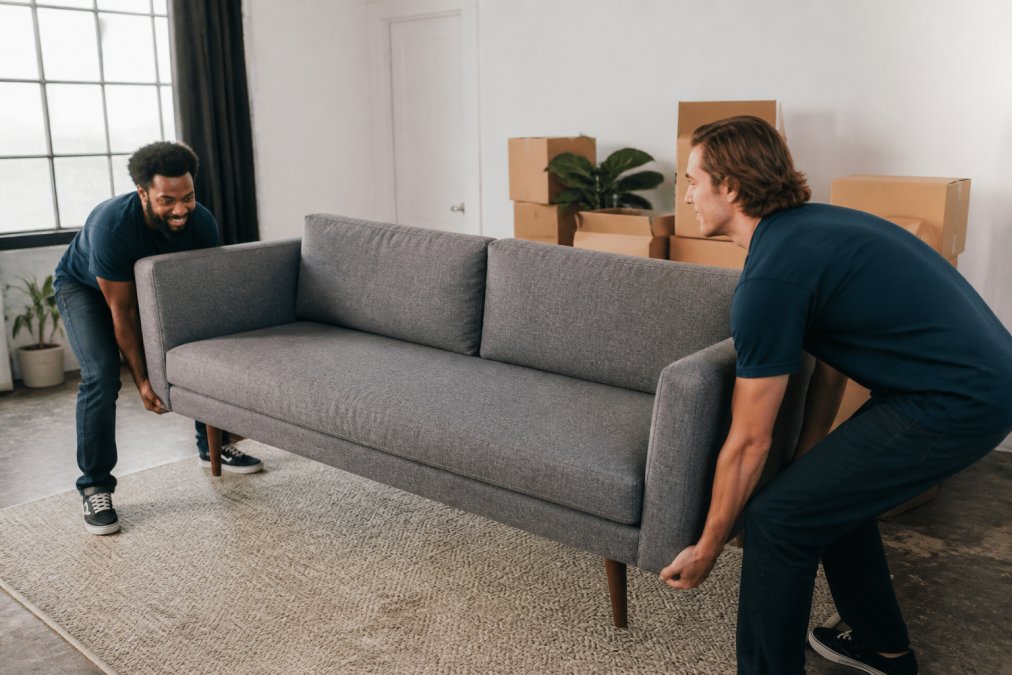
Table of Contents
- Tips for Moving Heavy Furniture: What You'll Need Before You Start
- Proper Lifting Techniques to Protect Your Back
- Best Furniture Sliders for Hardwood Floors
- How to Move Heavy Furniture Upstairs Safely
- Moving Heavy Furniture Alone Safely: What You Can and Can't Do
- Protecting Your Floors and Furniture During the Move
- Common Mistakes to Avoid When Moving Heavy Furniture
- Conclusion: When to Call Professional Movers
- Frequently Asked Questions
Last Updated: September 27, 2026
Tips for Moving Heavy Furniture: What You'll Need Before You Start
Moving heavy furniture without the right gear is how backs get hurt and walls get dinged. At Curbside Movers, we've handled small and mid-size moves for 15 years, and the pattern is always the same: the people who plan ahead finish faster and hurt less. This guide gives you practical tips for moving heavy furniture, from the tools to grab before you start to the moment you should hand the job off.
The first rule is simple. Never lift with your back when you can slide, tilt, or roll instead. Your spine is not a crane, and a couch is not a suitcase.
Here's what you'll need before the first piece moves:
- Furniture sliders and glides for hard floors
- A furniture dolly and moving straps
- Moving blankets and stretch wrap
- A tape measure and a screwdriver set
- Work gloves and closed-toe shoes
Essential Tools and Equipment
A furniture dolly is a flat platform on wheels that carries the full weight of a dresser, couch, or bookcase. It's the single most useful tool for any move, and it costs less than a copay for a back injury.
Moving straps let two people share a load through their legs and shoulders instead of their arms. Sliders and glides sit under furniture legs so you can push instead of lift. Moving blankets and protective padding keep corners from punching through drywall.
You don't need every tool for every job, but the basics pay for themselves on the first move.
Clearing Pathways and Measuring Doorways
Measure every doorway, hallway, and stairwell turn before you lift anything. A couch that fits through the front door can still jam at the hallway corner.
Walk the full route with a tape measure and note the tight spots:
- Doorway width, including the frame
- Hallway width at the narrowest point
- Elevator door and cab dimensions
- Any tight turns or low ceilings
Remove rugs, shoes, and small items from the path first. A clear pathway is a safety feature, not a nicety.
Proper Lifting Techniques to Protect Your Back
Good lifting technique comes down to four things: bend your knees, keep the load close, tighten your core, and never twist. The goal is to let your legs and hips carry the weight while your back stays straight.
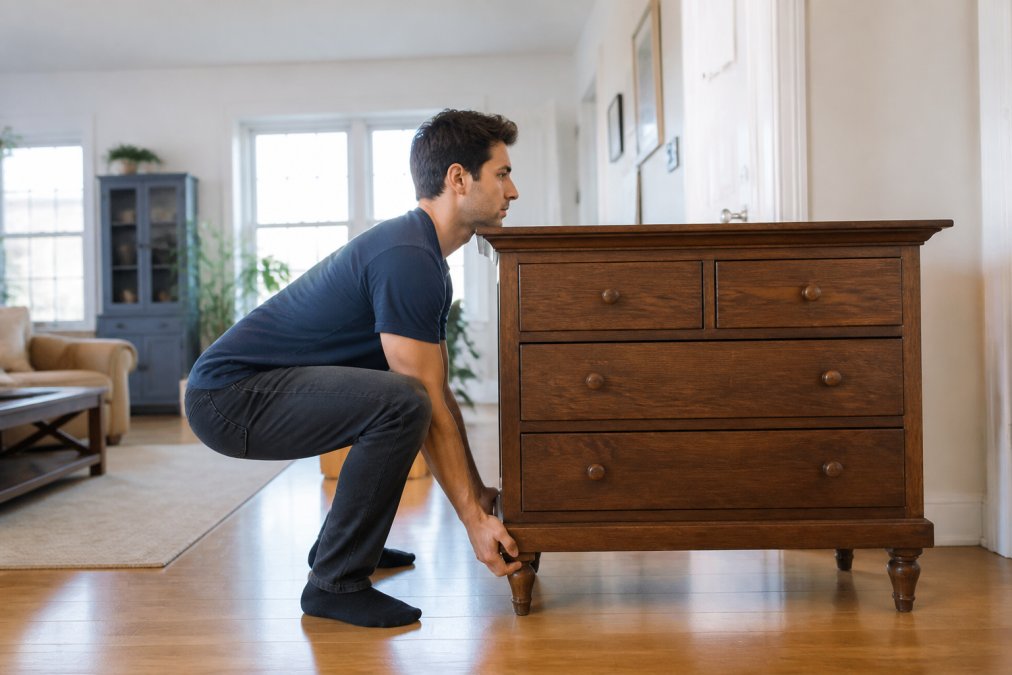
The NIOSH lifting equation guidance is the standard safety reference for manual lifting limits. It's built around one idea: the farther a load sits from your body, the more force your spine absorbs.
A common mistake is lifting with straight legs and a rounded back.
The High-Low Method and Pivot and Tilt Technique
The high-low method means one person lifts from a high grip and the other from a low grip. This splits the weight and keeps the piece level as you move.
Using Moving Straps and Furniture Dollies
Moving straps turn your legs into the lifting engine. Slide the straps under the piece, loop them over your shoulders, and stand up with your legs. The load stays close to your center of gravity.
Best Furniture Sliders for Hardwood Floors
Furniture sliders are the best tool for hardwood floors because they cut friction without scratching the finish. Felt pads work for light pieces. Plastic or rubber-bottomed sliders work better for heavy items.
Match the slider to the floor and the weight:
| Slider Type | Best For | Watch Out For |
|---|---|---|
| Felt pads | Light chairs, small tables | Wear out fast on heavy loads |
| Plastic sliders | Heavy furniture on hardwood | Can scratch if grit gets underneath |
| Rubber-bottom sliders | Carpet and rugs | Drag on bare wood |
| Furniture glides | Permanent placement | Not meant for repeated moves |
How to Move Heavy Furniture Upstairs Safely
Moving heavy furniture upstairs safely requires two people, a clear stairway, and a plan for every landing. Stairs are where most injuries happen, because the load blocks your view and the angle shifts with every step.
Follow this order:
- Clear the staircase completely, including handrails and landings.
- Measure the stair width and any turn at the top.
- Decide who takes the top and who takes the bottom.
- Use moving straps so the load stays close to both bodies.
- Lift together on a count, and rest on each landing.
Moving Heavy Furniture Alone Safely: What You Can and Can't Do
Moving heavy furniture alone safely is possible only for items you can slide, tilt, or roll. Anything you have to fully carry should wait for a second person.
What you can do alone:
- Slide furniture on sliders across flat floors
- Tip and walk a piece on two legs for short distances
- Use a dolly for boxed or balanced items
What you should never do alone:
- Carry a couch or dresser down stairs
- Lift anything above chest height
- Move a piece you can't see around
Protecting Your Floors and Furniture During the Move
- Hardwood and laminate: Lay down rosin paper or a heavy canvas drop cloth taped at the seams. Rosin paper lets sliders glide without trapping grit the way bare floor does.
- Tile and stone: Add a layer of 1/4-inch plywood or rigid plastic floor runners over the grout lines. Grout is softer than tile and catches the edge of a slider, which is how chips start.
- Carpet and rugs: You don't need a hard layer, but roll and remove area rugs first. A rug that bunches under a dolly is a trip hazard and can send a load sideways.
- Thresholds and transitions: Tape a strip of cardboard or a rubber threshold ramp over metal or wood transition strips. These are the most common snag point on any move.
For the furniture itself, the order matters:
- Remove legs, casters, and hardware from tables and case goods. Bag the screws and tape the bag to the underside so it travels with the piece.
- Wrap corners and edges with moving blankets or foam corner guards, then secure with stretch wrap. Corners are where drywall and door frames get punched.
- Tape drawers and cabinet doors shut with painter's tape, not packing tape, which can lift finish.
- Wrap glass-front cabinets and mirrors in cardboard over the blanket layer so nothing presses directly on the glass.
One trade-off to weigh: felt sliders are gentle on hardwood but compress and grab under heavy loads, while hard plastic sliders glide farther but will scratch if a single grain of grit gets underneath. On finished wood, clean the floor, then use plastic, never both felt and plastic on the same leg.
Common Mistakes to Avoid When Moving Heavy Furniture
The biggest mistake is lifting before you plan. People grab the couch, then realize it won't fit through the door.
Other mistakes we see on almost every job:
- Skipping the doorway measurement
- Lifting with a rounded back
- Twisting while carrying a load
- Using the wrong slider for the floor type
- Trying to move a heavy piece alone
- Leaving drawers and doors unsecured
Conclusion: When to Call Professional Movers
Some jobs are worth handing off. If a piece is too heavy, the staircase is tight, or you simply don't have a second person, call a pro. The risk of injury and damage usually outweighs the savings.
Frequently Asked Questions
What should you put under heavy furniture to make it slide easily?
Furniture sliders and glides are the best option for most floor types. For hardwood floors, choose felt-bottom sliders to prevent scratches. For carpet, use plastic sliders. Moving blankets underneath furniture also reduce friction in a pinch. Avoid dragging furniture directly across hardwood, as it can gouge the surface. If you lack sliders, a sturdy towel or cardboard can work as a temporary solution, but dedicated sliders provide better control and floor protection.
How do you move heavy furniture upstairs safely?
Moving heavy furniture upstairs requires careful planning. Measure stairwell width and turns before starting. Use moving straps to keep your hands free and maintain proper grip. One person should lead from above, controlling the weight, while another supports from below. Keep the load close to your body and use your legs, not your back. For items over 200 pounds or awkward shapes, hire professional movers who have the equipment and experience to navigate stairs without injury or damage.
What is the easiest way to move heavy furniture by yourself?
The safest approach is to use furniture sliders or a dolly to minimize lifting. Disassemble items when possible, removing drawers, legs, and shelves to reduce weight. Use moving straps to shift the load onto your larger muscle groups. Slide rather than lift whenever you can. For items you cannot safely handle alone, such as sofas or pianos, book professional movers through an app like Curbside Movers for fast, affordable help.
What do professional movers refuse to move?
Professional movers typically refuse hazardous materials, including propane tanks, paint, chemicals, and ammunition, due to safety and liability regulations. They may also decline items that are structurally compromised, excessively heavy without proper equipment, or irreplaceable valuables they cannot insure. Some movers won't transport pianos or safes without specialized gear. If you're unsure whether your item qualifies, ask before booking. Curbside Movers handles most furniture and small to mid-size moves, so check with them for specific items.