Last Updated: November 14, 2026
Quick Summary
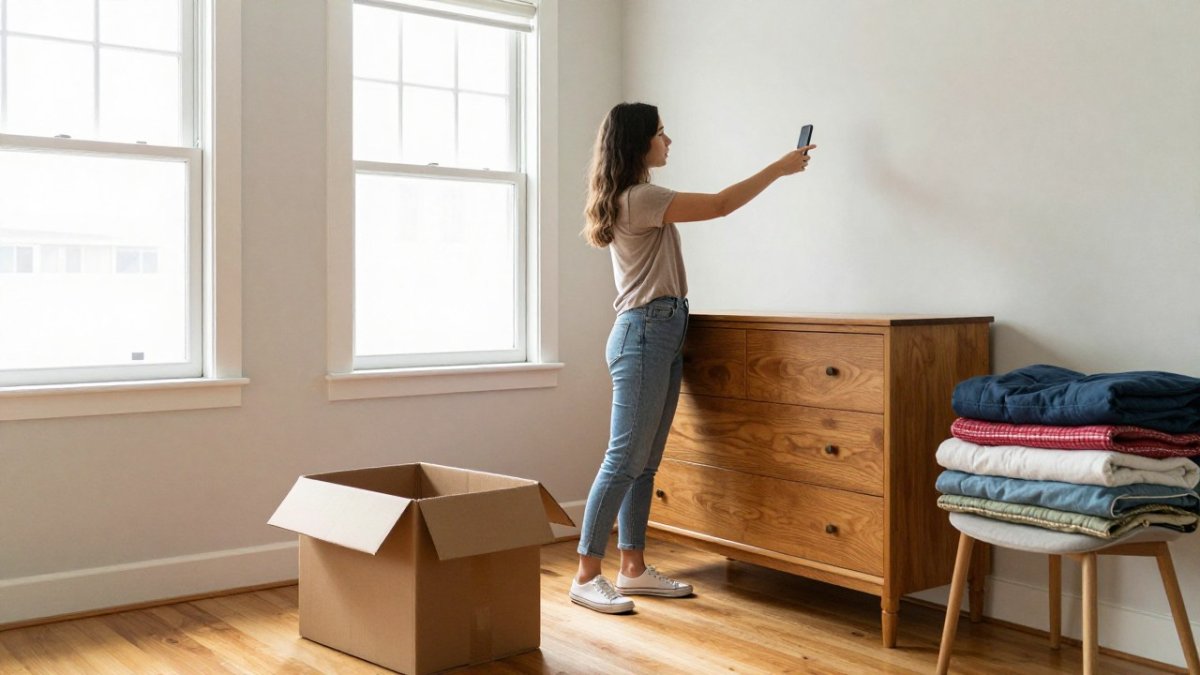
A virtual walkthrough moving estimate is a video survey where a mover tours your home with you over a live call and builds your quote from what the camera shows. You hold the phone, the estimator asks questions, and the inventory gets counted in real time. A structured tour produces a number you can hold a mover to.
- A virtual survey takes 15 to 30 minutes, while an in-home estimate takes 45 to 90 minutes.
- Walk in a fixed order starting at the front door and ending at storage areas.
- Open every closet, cabinet, and drawer so the estimator sees what is inside.
- Garage and storage spaces are the most commonly skipped and most common source of quote changes.
- Ask whether the estimate is binding or nonbinding before you sign anything.
Table of Contents
- How a Virtual Walkthrough Moving Estimate Works
- Virtual vs. In-Home Moving Estimate: Which Fits Your Move
- Your Virtual Moving Estimate Checklist Before the Call
- What to Show on Camera, Room by Room
- Moving Estimate Questions to Ask Before You Accept
- Reading Your Virtual Walkthrough Moving Estimate PDF
- Book Your Video Estimate in the Curbside Movers App
- Frequently Asked Questions
How a Virtual Walkthrough Moving Estimate Works
A virtual walkthrough moving estimate is a video survey where a mover tours your home with you over a live call and builds your quote from what the camera shows. You hold the phone, the estimator asks questions, and the inventory gets counted in real time.
A virtual walkthrough lets you point your camera at the space, the estimator prices what they see, and you receive a written estimate without a stranger walking through your apartment.
Here is the part most guides get wrong: the estimate is only as accurate as the tour you give. A rushed five-minute walkthrough produces a guess. A structured one produces a number you can hold a mover to.
Below, you'll find how to give a tour that protects your quote, plus a checklist to use before the call.
Virtual vs. In-Home Moving Estimate: Which Fits Your Move
A virtual survey wins for most apartment and small-home moves. An in-person walkthrough still makes sense when your belongings are unusually complex or your building access is genuinely hard to explain.
| Factor | Virtual Walkthrough | In-Home Estimate |
|---|---|---|
| Time to complete | 15 to 30 minutes | 45 to 90 minutes |
| Scheduling window | Often same or next day | Usually several days out |
| What the estimator sees | What you choose to show | The whole home, including what you skip |
| Best for | Apartments, studios, single-room moves | Large homes, specialty items, tight access |
| Main risk | Items left off camera | Slower booking, more scheduling friction |
The honest trade-off: a virtual estimate depends on your camera work. If you skip the storage closet, the quote will miss it, and the crew will find it on moving day. An in-home estimator catches those gaps because they open the door themselves.
For studio and one-bedroom moves, that risk is small. You know your own apartment. For a large home with a garage, specialty items, and a narrow stairwell, an in-person visit can be worth the slower timeline.
Your Virtual Moving Estimate Checklist Before the Call
Preparation is the whole game with a virtual moving estimate checklist. Thirty minutes of setup before the call saves you an awkward re-quote later.
- Charge your phone and clear storage space for photos
- Test your connection from the room farthest from your router
- Turn on every light and open blinds for clear footage
- Write a short inventory list of anything you already know is unusual
- Measure the doorways and note any tight turns
- Confirm your pickup and delivery addresses are correct
- Note stairs, elevator reservations, and parking rules at both ends
- Set aside special items: artwork, mirrors, plants, anything fragile
- Have your target move dates ready
- Ask about privacy before the call starts
That last item matters more than people expect. Ask the estimator whether the call is recorded and how long any recording is kept. A reputable moving company will answer plainly.
What to Show on Camera, Room by Room
Walk in a fixed order so nothing gets skipped. We recommend starting at the front door and moving room by room, ending at the storage areas people forget.

Here is the room-by-room sequence that produces the cleanest inventory, with the specifics that actually move the number:
- Entry and hallways: show the door width, any steps, and the path from the door to the truck. Tight turns and long carries add labor, so let the estimator see them.
- Living room: pan slowly across furniture, then open every closet and cabinet. Show what is inside, not just the door. Note wall-mounted TVs, shelving, and anything that needs to be disassembled.
- Kitchen: show the appliance fronts, then open the pantry, cabinets, and drawers. Small appliances, dishware, and pantry goods add volume fast. Point out anything mounted or built in.
- Bedrooms: frame each bed, dresser, and closet interior. Open the closet doors and show the full rod. Note under-bed storage and anything on high shelves.
- Bathrooms: quick pan, note any wall-mounted items, and show the medicine cabinet and linen closet.
- Garage or storage: the most commonly skipped space, and the most common source of quote changes. Show shelves, tools, bikes, boxes, and anything stacked against the wall. If it is going, it counts.
- Attic, basement, and crawl space: if you have one, show the access and the contents. These spaces are easy to forget and expensive to add later.
- Outdoor items: patio furniture, grills, bikes, planters, and anything stored on a balcony or in a shed.
Narrate as you go. "This dresser stays, the mirror goes" tells the estimator more than a silent pan ever will. Slow down on closets and shelves; that is where moving volume lives.
Watch out: items left off camera can become changes to the quote on moving day.
If you have special items such as a piano, a safe, oversized furniture, or fragile belongings, show them clearly and say what they are, since these items can affect labor and pricing.
Moving Estimate Questions to Ask Before You Accept
Ask these moving estimate questions before you sign anything. The answers separate a firm quote from a number that will move on you.
- Is this a binding or nonbinding estimate?
- What exactly triggers a price change, and who approves it?
- Are stairs, long carries, and elevator wait time included?
- Does the quote cover packing materials, or labor only?
- What is the cancellation and reschedule policy?
- Who handles damage claims, and what is the process?
- Will the same crew that quotes me show up on moving day?
The first question is the one that matters most, and most guides skip the explanation. A binding estimate locks the price for the inventory and services listed in the quote. A nonbinding estimate is an educated guess that can go up or down based on the actual weight or volume and the services performed. Neither is automatically better, a binding quote protects you from surprises, but only if the inventory behind it is complete. A nonbinding quote can be cheaper if your inventory shrinks, but it can also grow on moving day.
Ask the estimator to walk you through the inventory assumptions in the quote, including which rooms and storage areas are counted. If the quote says "approximately" next to a line item, that is a number that can shift.
Then compare quotes on an apples-to-apples basis. Line up the services side by side: packing, unpacking, disassembly, stairs, long carries, elevator wait time, and materials. A quote that looks cheaper often excludes services another quote includes. Ask each company to confirm what is in and what is out.
Watch out: if your inventory changes after the estimate, you add a room, remove a piece of furniture, or decide to pack yourself, tell the company before moving day. Additions and removals can change the final price, and an inaccurate inventory is the most common reason a quote grows. Ask how to update the estimate and get the change in writing.
Ask whether the crew that quotes you will be the crew that shows up on moving day. If you have been burned by a quote that grew, read up on how moving services with no hidden fees are structured so you know which charges to question before you accept.
Reading Your Virtual Walkthrough Moving Estimate PDF
Your virtual walkthrough moving estimate PDF should break down labor, materials, and any access charges as separate line items. If it arrives as one lump sum with no detail, ask for the itemized version.
Read it in this order: total first, then line items, then the fine print. Look for anything listed as "estimated" rather than fixed. Those are the numbers that can shift.
Understanding how transparent pricing is built into each line item makes this reading faster. You will know which charges are standard and which deserve a question.
One habit worth keeping: compare the PDF against your own inventory list. If a room is missing, flag it before moving day, not after.
Book Your Video Estimate in the Curbside Movers App
Booking a video estimate takes minutes in our app. You pick a time, hop on the call, and get a written quote built from what you show us.
Curbside Movers has 15 years of moving excellence in the Bay Area, and our app lets you manage your move from your phone: $0 down to book, background-checked professionals, and upfront pricing with no hidden fees. One customer review reads: "Super fast and professional! They handled my last-minute move with zero stress."
If you would rather skip the live call entirely, you can also get a moving quote by text by sending photos and inventory details. And if you are still vetting companies before you commit, our moving company vetting checklist covers the licenses and insurance questions worth asking.
Ready to see your number? Book your move and get a stress-free estimate you can plan around.
Most movers quote from memory and hope the walkthrough matches. You do not have to accept that. Curbside Movers gives you a video estimate built from what you actually show us, backed by transparent pricing, background-checked crews, and app-based scheduling that takes minutes. Get started with Curbside Movers and walk into moving day knowing your number.
Frequently Asked Questions
How long does a virtual walkthrough moving estimate take?
Video surveys take as long as it takes to show each room and storage area you need the estimator to see. A five-minute walkthrough is possible if you send photos and an inventory list in advance. The clock mostly depends on how many rooms, closets, and storage areas you need to show and how many questions you ask.
How accurate are virtual moving estimates compared with in-home visits?
Accuracy depends on what the estimator can see. A virtual walkthrough that covers every room, closet, garage, and stairwell gives an estimator nearly the same information as an in-person visit. Send photos of anything you cannot show on camera to close the gap.
What should I have ready before the video call starts?
Charge your phone, test your connection, turn on lights in every room, and clear a path so you can walk and film at the same time. Have your inventory list, building move-in rules, elevator reservation details, and parking notes on hand. If you are moving items from a storage unit or a pickup location like a marketplace seller's apartment, confirm access before the call so the estimator can plan for it.
Can I get a moving quote online without a live video call?
Yes. Many companies accept a photo-and-inventory submission instead of a live call. You record a short video or upload pictures of each room, list furniture and box counts, and note stairs, elevators, and parking. The trade-off is fewer chances to ask questions in real time, so review the written estimate carefully and confirm whether it is binding or nonbinding before you book.
