
Table of Contents
- Why Movers Look Beyond TaskRabbit for Moving Help
- How We Compared These Moving Platforms
- Side-by-Side Comparison: Pricing, Availability, and Protection
- Moving Furniture From Facebook Marketplace: What to Check Before You Book
- Lugg vs. Dolly: Which Handles Your Move Better?
- Furniture Delivery Apps and Same-Day Furniture Movers: What Actually Shows Up
- Insurance, Liability, and Damage Claims Across These Platforms
- Choosing the Right TaskRabbit Alternative for Your Move
- Frequently Asked Questions
Last Updated: October 16, 2026
Why Movers Look Beyond TaskRabbit for Moving Help
TaskRabbit built its reputation on odd jobs: mounting a TV, assembling a bookshelf, hauling a single dresser.
At Curbside Movers, we've spent 15 years handling this work across the Bay Area, and the pattern is consistent: customers arrive frustrated after a general task platform quoted one price and delivered another.
That last point matters more than most people realize. A 2023 survey from Move.org's moving industry research found that damage disputes are among the top complaints filed after a move, and the outcome depends almost entirely on who holds liability.
How We Compared These Moving Platforms
We evaluated each platform type against five criteria: vehicle access, provider vetting, insurance coverage, booking speed, and pricing transparency. Platforms offering only labor, with no truck, fail on anything larger than a few boxes.
The Federal Motor Carrier Safety Administration's consumer protection guidance is clear that household goods movers operating across state lines must be registered, and that consumers have the right to ask for proof of insurance before work begins.
Here's the framework we use:
| Criteria | What to Check | Why It Matters |
|---|---|---|
| Vehicle access | Does the platform supply a truck or van? | Labor-only services can't move a couch without one |
| Provider vetting | Background checks, experience level | Heavy lifting causes most injuries and damage |
| Insurance | Liability coverage, damage claims process | Determines who pays when something breaks |
| Booking speed | Same-day availability, minimum booking | Last-minute moves need fast confirmation |
| Pricing | Hourly rate vs. fixed quote, service fees | Hidden fees are the top complaint |
Side-by-Side Comparison: Pricing, Availability, and Protection
Most roundups compare platforms on brand reputation, which tells you nothing about cost or fit. Below is a like-for-like comparison built around four things: how you're billed, the minimum commitment, how fast you can book, and who pays when something breaks.
Pricing models, compared like for like
Three billing structures exist in this category, and they behave very differently on moving day.
| Model | How it works | Where it helps | Where it hurts |
|---|---|---|---|
| Hourly labor (2-hour minimum typical) | You pay per worker per hour, plus a vehicle fee if one is supplied | Short jobs, single items, jobs where you control the pace | Clock runs during elevator waits, parking searches, and stair carries |
| Fixed quote | Price locked after an inventory or photo review | Full apartment moves, multi-stop pickups | Requires accurate inventory upfront; changes trigger re-quotes |
| Quote-based (on-site or virtual survey) | Estimate issued after review, sometimes binding, sometimes not | Full household moves, long carries, packing | Lead time; non-binding estimates can move |
In dense metro areas, a two-hour minimum on hourly labor plus a one-hour travel or dispatch fee means the smallest realistic booking is closer to three billable hours. Ask for the all-in number, not the headline rate.
Minimums, travel fees, and cancellation terms
These line items turn a quoted rate into a final invoice. Get each in writing before you confirm:
- Minimum booking time. Two hours is common for labor-only; three to four hours when a truck and two-person crew are dispatched.
- Travel or dispatch fee. Often a flat charge per crew, not per hour, and it applies even if the job finishes early.
- Stair and long-carry fees. Some platforms charge per flight after the first; others fold it into the hourly rate.
Availability and booking logistics
Lead time varies more than pricing. Same-day availability is usually limited to dense metro areas and depends on crew supply that day. Suburban and rural coverage often requires 24 to 72 hours of lead time, and some platforms won't dispatch a truck outside a defined service radius.
When you book, confirm four logistics details:
- Crew size. One worker with a van handles a nightstand; a sectional needs two people and a box truck.
- Vehicle type and capacity. A covered bed or enclosed van protects upholstery; an open pickup does not.
- Number of stops. Marketplace pickups are two-stop jobs (seller, then your place). Some platforms bill per stop.
- Scheduling window. A two-hour arrival window is standard; a firm appointment time is not.
Protection: what's actually covered
Protection is where the real differences show up and marketing language is least specific. Ask three questions before booking:
- Does the platform carry liability coverage, or does the worker?
- What's the claims process if something is damaged, and what's the filing window?
- Is there a deductible, and who pays it?
Platforms that answer these clearly, in writing, are worth your money. Platforms that route you to the worker's personal coverage are telling you the risk is yours.
Which service fits which move
Match the service to the job size:
- One or two heavy items (couch, mattress, dresser): hourly labor plus a van or box truck, two-person crew.
- Studio or one-bedroom apartment: two workers and a box truck, three-hour minimum typical. Confirm elevator and stair access at both ends.
- Packing plus loading: add a packing crew or book a longer window; packing a one-bedroom commonly runs several hours.
For an interstate haul, a full home's worth of furniture, or high-value items like pianos or artwork, a licensed moving company is the more appropriate choice.
Moving Furniture From Facebook Marketplace: What to Check Before You Book
Buying furniture from Facebook Marketplace is cheap; getting it home is where the cost creeps in. A $50 dresser can cost more than that to transport if you book the wrong service.
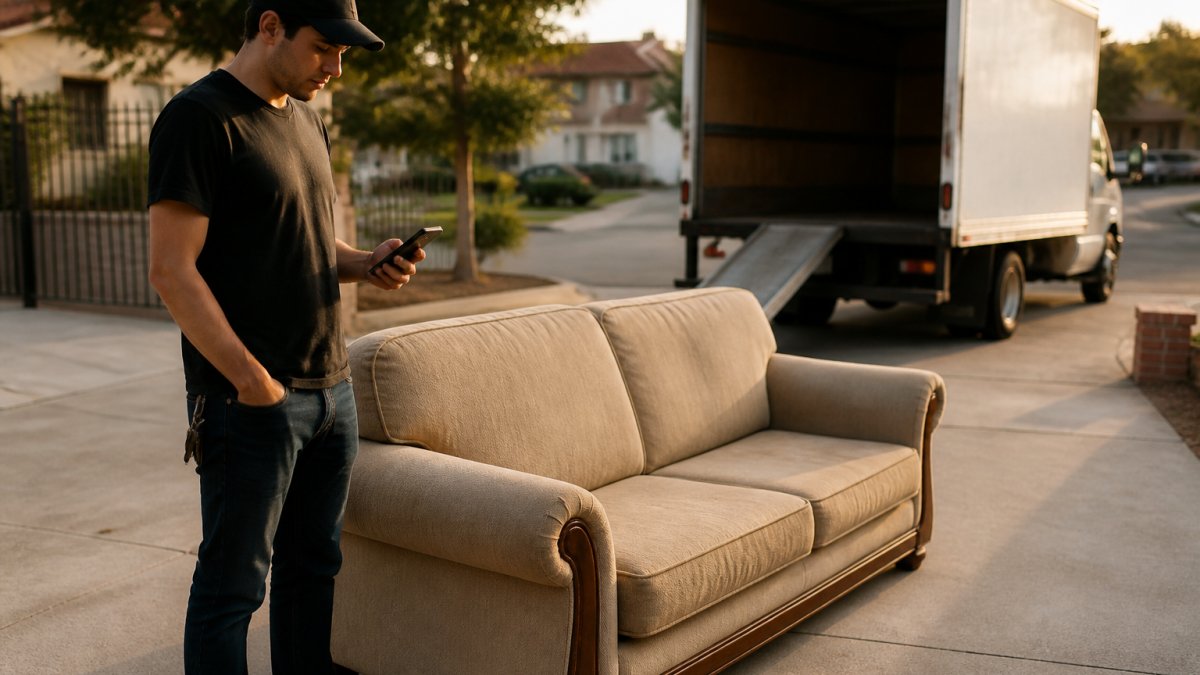
Before you book, confirm four things with the seller: exact dimensions, whether it's disassembled, whether there are stairs at pickup, and whether there's truck parking access.
For same-day furniture movers, match the vehicle to the item.
Lugg vs. Dolly: Which Handles Your Move Better?
Both platforms target the same customer: someone moving a few large items without hiring a full moving company. The difference is how each handles vehicle supply and pricing.
Lugg positions itself around on-demand pickup and delivery, which suits single-item transport. Dolly focuses on labor plus vehicle for larger jobs.
Moving one couch across town? Either works. Moving an entire apartment?
What most comparisons miss is the building side.
Furniture Delivery Apps and Same-Day Furniture Movers: What Actually Shows Up
Same-day furniture movers dispatch a vehicle and crew within hours of booking, typically for single-item or small-load transport. What shows up depends on how the platform classifies the job.
Some apps send a single worker with a small van, fine for a nightstand, useless for a sectional sofa.
Confirm crew size and vehicle type in writing. A "same-day" label tells you nothing about capacity.
For online marketplace shoppers, the practical workflow looks like this:
- Get exact dimensions and weight from the seller.
- Photograph the item and its location.
- Confirm stairs, elevator access, and parking at both ends.
- Book a crew size and vehicle that matches the item.
- Confirm the damage policy before payment.
Skip any step and you're gambling.
Insurance, Liability, and Damage Claims Across These Platforms
Insurance is the least understood part of booking moving help and the most expensive to get wrong. Coverage depends on whether the worker is an employee or contractor, what the platform's terms say, and whether it offers protection beyond a damage-claim form.
The contractor distinction, and why it decides your claim
Many general task platforms classify workers as independent contractors. The platform then disclaims liability and points you to the worker's own coverage, which often doesn't exist or is far below the value of what broke.
Dedicated moving services more often carry their own liability coverage and handle claims through a defined internal process. That difference, not the hourly rate, determines whether you're made whole after an accident.
What platform protections typically do and do not cover
Read the terms before you book. A common pattern across this category:
Usually covered, subject to limits:
- Damage caused by the crew during a carry, if the platform carries liability coverage
- Loss of an item while it's in the crew's possession
- A defined per-item or per-shipment liability cap
Usually excluded or capped low:
- Pre-existing damage, scratches, and wear the crew can document before the move
- Items packed by you, not by the crew (owner-packed boxes are commonly excluded)
- High-value items such as jewelry, artwork, electronics, and musical instruments, which often need separate valuation or a rider
A per-item liability cap is the number that matters most. If it's low relative to what you're moving, the platform's protection is largely symbolic.
Valuation versus insurance: they are not the same thing
This is the distinction most customers miss. Released value (sometimes called basic carrier liability) is a minimal, weight-based reimbursement that is included by default and rarely covers the replacement cost of furniture. Full value protection reimburses repair or replacement up to a declared value, usually for an added charge. The U.S. Department of Transportation's consumer moving guide recommends asking for written confirmation of coverage and valuation before the move begins, not after, and notes that interstate household goods movers must provide valuation options in writing.
For local jobs, ask what the reimbursement basis is, not just whether "insurance" exists.
The claims process, step by step
A defensible claim depends on documentation created before the crew arrives:
- Photograph everything before the move. Wide shots of each room, close-ups of existing scratches, and a photo of the item next to a tape measure.
- Note condition on the inventory or bill of lading. List existing damage before signing.
- Inspect on delivery, before the crew leaves. Note damage on the delivery paperwork in the crew's presence; claims filed after the truck leaves are harder to substantiate.
- File within the stated window. Claims windows are often short, sometimes a few days for local moves, longer for interstate. Confirm the deadline in writing.
- Keep the paper trail. Photos, the signed inventory, the receipt, and any correspondence.
Questions to get answered in writing before you book
- The platform's liability limit per item and per shipment
- The claims filing window and where to file
- Whether there's a deductible, and who pays it
A platform that can't answer these in writing isn't one to trust with anything valuable. If your items exceed the cap, buy additional valuation where offered or move those items with a licensed carrier offering full value protection.
Choosing the Right TaskRabbit Alternative for Your Move
Match the platform to the job. Single-item pickup? A furniture delivery app works. Full apartment move with stairs and elevator coordination?
This is where Curbside Movers fits.
Customers consistently mention two things: movers who show up on time and a price that matches the quote.
If you're weighing taskrabbit alternatives for a move that needs more than a handyman, start with a platform that does this work every day.
Frequently Asked Questions
What is the best alternative to TaskRabbit for moving?
The best taskrabbit alternatives for moving are platforms built specifically for transport and labor, not general errands. Look for services that offer loading and unloading, furniture moving, and heavy lifting with transparent hourly rates or fixed-price quotes. Same-day availability, background-checked providers, and liability coverage matter more than a low headline rate. Compare service areas, minimum booking windows, and cancellation policies before you commit, since a platform that works for a couch pickup may not handle a full apartment move.
Is Lugg or Dolly better for moving furniture?
Both Lugg and Dolly handle furniture moving and local moving jobs, but they differ in booking speed and pricing structure. Lugg tends to be stronger for fast, on-demand service with same-day availability, while Dolly emphasizes scheduled moves and larger loads. The right choice depends on move size, whether you need stairs or elevator coordination, and how much flexibility you have on timing. Check each platform's service area and insurance coverage before booking, because protection terms vary by provider.
What apps can help move furniture from Facebook Marketplace?
Several furniture delivery apps connect you with independent contractors for pickup and drop-off. When buying secondhand, confirm the seller's address, item dimensions, and whether the item disassembles. Book a service with loading and unloading included, and ask about stairs or long carries upfront to avoid surprise fees. Platforms with background-checked providers and clear damage protection give you recourse if something breaks in transit. Same-day furniture movers work well for single-item pickups when you need speed.
How do I choose a reliable app for moving a couch or other large furniture?
Start with a practical vetting checklist: confirm the platform operates in your service area, check whether providers are background-checked, and read the insurance coverage terms. Ask about vehicle access, stairs, and lifting capacity for oversized items. Compare hourly rates against fixed-price quotes so you know what you'll actually pay. Look at customer reviews and ratings for patterns, not single complaints. Finally, confirm the cancellation policy and response time if a provider cancels on you.
Moving is stressful enough without wondering whether the crew will show up, whether the price will hold, or whether you're covered if something breaks. Curbside Movers removes those variables with background-checked professionals, transparent upfront pricing, $0 down to book, and 15 years of moving experience behind every job. Get a quote from Curbside Movers and manage your entire move from your phone.