Table of Contents
- Why a Standard Dolly Fails in Most Apartments
- Dolly Alternatives That Actually Work in Tight Spaces
- How to Move Heavy Furniture Alone Without a Dolly
- Moving Furniture from Facebook Marketplace: Pickup to Apartment
- On-Demand Moving Apps for Small Moves: The Real Alternative
- Rent vs Buy vs Book Help: Cost and Convenience Breakdown
- Protecting Floors, Walls, and Elevators During the Move
- Frequently Asked Questions
Last Updated: October 9, 2026
Why a Standard Dolly Fails in Most Apartments
A four-wheel platform dolly is the wrong tool for most apartment moves because it needs wide, flat, and level ground to work.
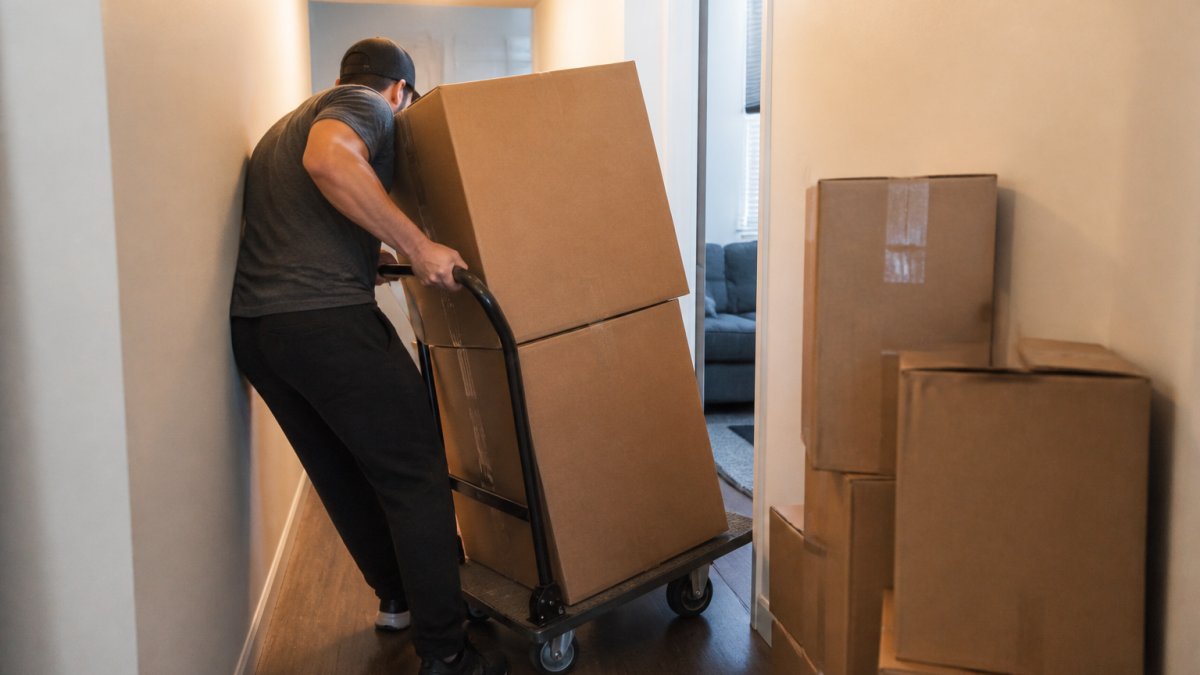
Here's the math. A standard platform dolly is roughly 60 to 90 centimeters wide. A typical apartment hallway runs about 90 centimeters.
Wheels make it worse, not better. Small hard casters catch on thresholds, stall on carpet edges, and drag grit across hard floors.
This is the part most guides skip. A dolly solves the easy 20 percent of an apartment move and creates new problems for the other 80 percent.
Dolly Alternatives That Actually Work in Tight Spaces
The right equipment depends on what you're moving, what's in the way, and how many people are helping. Stairs, tight hallways, narrow doorways, and elevator thresholds each call for a different tool. Here's how the main alternatives compare, with apartment-specific notes.
| Tool | Best For | Stairs | Tight Hallways | Elevators | Solo Move | Typical Cost |
|---|---|---|---|---|---|---|
| Forearm forklift / lifting straps | Couches, mattresses, appliances | Yes | Yes | Yes | Yes, with care | $20-$40 |
| Furniture sliders | Boxes, dressers, bookcases | No | Yes | Yes | Yes | $10-$25 |
| Lever and roller set | Heavy furniture on hard floors | No | Limited | Yes | Yes | $30-$60 |
| Shoulder dolly / hump strap | Refrigerators, washers, tall furniture | Yes | Yes | Yes | No, needs two | $30-$50 |
| Moving bags | Mattresses, clothing, soft goods | Yes | Yes | Yes | Yes | $15-$30 |
| Stair-climbing hand truck | Appliances, boxes on stairs | Yes | Limited | Yes | Yes | $100-$300 (buy) or $30-$60/day (rent) |
One rule holds across all six: match the tool to the surface, the weight, and the route, not to the price.
Lifting Straps and Forearm Forklifts
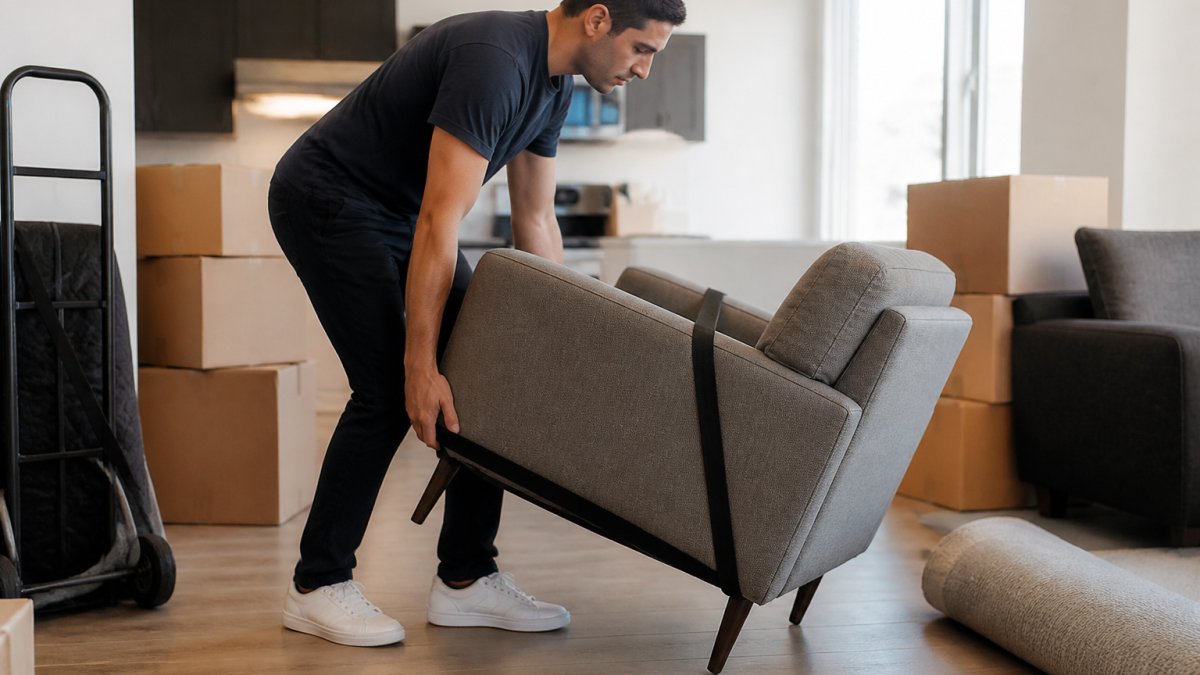
A forearm forklift is a pair of nylon straps that loop under a heavy item and over your forearms. The load transfers to your arms and legs instead of your lower back. For a couch or mattress, two people can carry it up a staircase that a dolly could never handle.
The catch is that both carriers need to be roughly the same height. Uneven height means uneven load, and the shorter person carries more of it. In an apartment stairwell, that imbalance is worse because you're also managing a turn at the landing.
Furniture Sliders and Lever-Roller Sets
Furniture sliders are flat pads that go under the legs of a dresser, bookcase, or desk. They glide across hard floors and low-pile carpet with very little effort.
Sliders are cheap and effective, but they only work on flat surfaces. Do not use them on stairs, and lift them over thresholds instead of dragging. In apartments, the biggest risk is the metal threshold strip at the door, it will catch a slider and stop the load cold.
Shoulder Dollies and Hump Straps
A shoulder dolly, sometimes called a hump strap, is a two-person harness system that puts the weight on your shoulders and hips. It is the standard tool for refrigerators, washers, and tall furniture.
The limitation is obvious: it requires two people. If you're moving alone, this is not your tool. In an apartment, the shoulder dolly shines on stairs because both carriers stay upright and can see their footing.
Stair-Climbing Hand Trucks
A stair-climbing hand truck uses a rotating set of wheels or a tri-wheel design to walk a load up or down a staircase one step at a time. It is the closest thing to a dolly that actually works in an apartment stairwell.
The trade-off is cost and bulk. A good stair-climbing hand truck runs $100-$300 to buy, or $30-$60 per day to rent from a home improvement store. It also needs a wider stairwell than a standard hand truck, so measure before you commit.
Item-by-Item Recommendations
- Boxes and totes: Furniture sliders or a standard hand truck on flat routes; carry by hand on stairs.
- Dressers and bookcases: Empty them, then use sliders on hard floors or a lever-roller set for heavy pieces.
- Mattresses: A moving bag or forearm forklift. Never drag a mattress, the cover tears and the springs bend.
- Refrigerators and washers: Shoulder dolly with two people, or book help. These are the items most likely to injure a solo mover.
- Couches: Forearm forklift for stairs, sliders for flat hallways. Measure the doorway before you start.
- Appliances on stairs: Stair-climbing hand truck if the stairwell is wide enough; otherwise, book help.
How to Move Heavy Furniture Alone Without a Dolly
Moving heavy furniture alone is possible if you reduce friction instead of trying to lift. The goal is to never carry the full weight with your back.
- Empty the item completely. Drawers out, shelves cleared, doors removed.
- Tilt the piece onto a corner and slide a furniture slider under the low edge.
- Lower it back down and push from the base, not the top.
- Walk it across the floor in short pushes rather than one long shove.
- At a threshold, lift the leading edge over the lip before pushing further.
- For stairs, use a lifting strap or call for help. Never drag furniture down stairs alone.
Moving Furniture from Facebook Marketplace: Pickup to Apartment
Buying a couch on Facebook Marketplace creates a specific problem: the seller wants it gone today, and you have a doorway to get it through.
Measure before you commit. Doorway width, hallway turns, stair width, and elevator depth all matter. A couch that fits the living room may not fit the building.
If the seller can't help load, you need either a friend with a truck or a service that handles pickup and delivery in one booking.
On-Demand Moving Apps for Small Moves: The Real Alternative
On-demand moving apps for small moves are services that send background-checked movers to a pickup address on short notice, usually for a single item or a small load.
This is where Curbside Movers fits. Our app lets you book background-checked professionals in minutes with $0 down and transparent, upfront pricing, no hidden fees, ever.
For an apartment move, that matters in three places: the stairwell, the elevator, and the doorway.
The honest limitation: on-demand services work best for small to mid-size moves. If you're relocating a three-bedroom home, you want a full moving company, not a two-person booking.
Rent vs Buy vs Book Help: Cost and Convenience Breakdown
Deciding between renting, buying, and booking help comes down to how often you'll move, how much risk you're willing to carry, and whether you can transport the tool yourself. Here's the honest breakdown with real numbers.
| Option | Upfront Cost | Reuse | Transport Needed | Best For |
|---|---|---|---|---|
| Buy tools | $20-$300 | Many moves | Yes, you own it | Frequent movers, homeowners |
| Rent tools | $10-$60 per day | None | Yes, both ways | One-time, planned moves |
| Borrow | Free | None | Yes, both ways | Friends nearby, flexible timing |
| Book help | $80-$200+ per move | None | No | Stairs, bulky items, tight timelines |
What Renting Actually Costs
A standard four-wheel platform dolly rents for about $10-$20 per day at most home improvement stores. A stair-climbing hand truck runs $30-$60 per day.
The hidden cost of renting is the round trip. You need a vehicle to pick up the tool, and you need to return it on time or pay a late fee. For a one-day apartment move, that round trip can eat two hours you could have spent moving.
What Buying Actually Costs
Buying makes sense only if you'll use the tool more than a few times. A good forearm forklift is $20-$40 and lasts for years. A stair-climbing hand truck is $100-$300 and takes up real storage space in an apartment, which is often the dealbreaker.
If you live in a small apartment, storage is the deciding factor. A shoulder dolly folds into a bag the size of a shoebox. A stair-climbing hand truck does not.
What Booking Help Actually Costs
On-demand moving services typically charge by the hour plus a minimum, with rates varying by market and job size. A single-item pickup and delivery in the same metro area commonly lands in the $80-$200 range, while a small apartment move with multiple bulky items runs higher.
The trade-off is clear: booking help costs more than a rental, but it removes the physical risk, the tool transport, and the logistics. For anyone moving a mattress, a couch, or an appliance up a staircase, that trade is usually worth it.
A Simple Decision Rule
- Moving once, one or two bulky items, no stairs: Rent or borrow sliders and a hand truck.
- Moving once, stairs involved, bulky items: Book help. The injury risk and damage risk outweigh the savings.
- Moving every year or two, no stairs: Buy a forearm forklift and a set of sliders. They pay for themselves in two moves.
- Moving every year or two, stairs involved: Buy a stair-climbing hand truck only if you have storage space. Otherwise, book help each time.
Protecting Floors, Walls, and Elevators During the Move
Damage during an apartment move usually happens in three places: hard floors, painted walls, and elevator interiors. All three are preventable with a few cheap supplies.
- Hard floors: felt pads under furniture legs, plus a runner mat along the main path.
- Walls: corner guards on tight turns, and a blanket taped over the sharpest corner.
- Doorways: remove the door if it swings into the path, and tape the strike plate.
- Elevators: pad the interior walls and door track before loading anything in.
- Stairs: check the railing and banister before you lean a load against them.
Building rules matter too. Most apartment buildings require a move-in window and an elevator reservation, and some charge a refundable deposit for common-area damage. Confirm both before moving day.
Frequently Asked Questions
How to move a couch with a furniture dolly?
A standard furniture dolly works for couches on flat, wide surfaces, but most apartment hallways and doorways are too narrow. Measure your narrowest passage first. If it is under 32 inches, skip the dolly and use lifting straps or furniture sliders instead. For solo moves, a forearm forklift lets you carry the couch without blocking your view of the path ahead.
Is it cheaper to rent or buy a dolly?
A basic moving dolly costs $30 to $80 at most hardware stores. Renting one runs $10 to $25 per day from equipment rental shops. If you move once and never again, renting makes sense. If you plan to move furniture from Facebook Marketplace regularly, buying a set of lifting straps ($20 to $40) plus furniture sliders ($10 to $20) gives you more flexibility in tight apartments than a dolly ever will.
What is the best way to move heavy furniture in an apartment alone?
Use furniture sliders under the legs for flat floors, and switch to a shoulder dolly or forearm forklift for stairs. Walk backward down stairs, keeping the load low and close to your body. Never twist your torso while carrying. If the item weighs more than you can safely handle, book on-demand help through an app. Movers arrive with the right equipment and insurance, providing a safer alternative.
Are on-demand moving apps better than renting equipment?
It depends on your situation. Renting equipment works if you have time, a helper, and a straightforward path. On-demand apps for small moves make more sense when you are alone, facing stairs, or moving a last-minute Facebook Marketplace purchase. Apps like Curbside Movers let you book background-checked professionals in minutes with transparent upfront pricing and $0 down, so you skip the equipment rental counter entirely.
Apartment moves fail on the details: the turn in the hallway, the lip at the threshold, the elevator window you didn't reserve. Curbside Movers was built for exactly those constraints. Book background-checked professionals through our app in minutes, see transparent upfront pricing with no hidden fees, and start with $0 down. Get a quote from Curbside Movers and let us handle the stairs.