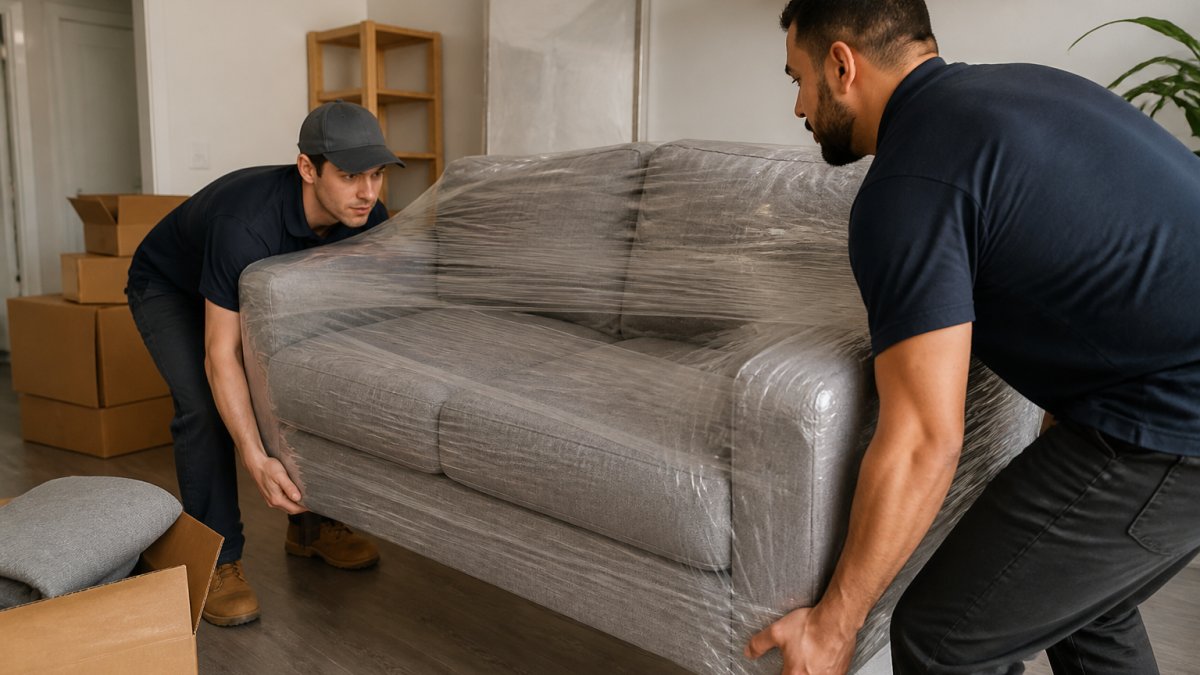
Table of Contents
- How to Move Apartment Furniture Safely: Step-by-Step
- Best Tools for Moving Heavy Furniture
- How to Disassemble Furniture for Moving
- Moving Furniture in Tight Apartment Spaces
- Lifting Techniques That Protect Your Back
- Protecting Furniture, Walls, and Floors in Transit
- When to Hire Professional Movers for Your Apartment Move
- Conclusion
- Frequently Asked Questions
Last Updated: October 4, 2026
How to Move Apartment Furniture Safely: Step-by-Step
When you move apartment furniture safely, it starts with one rule: plan the path before you lift anything.
Most guides say "lift with your legs" and stop there.
These steps are built for real apartments: narrow halls, tight corners, and stairwells never designed for a sleeper sofa.
- Clear the path and measure every doorway
- Gather the right tools before moving day
- Take apart what you can
- Use sliders and dollies instead of your arms
- Lift with your legs, not your back
- Pad, wrap, and secure everything
- Load the truck with weight in mind
U.S. Department of Health and Human Services guidance on safe lifting
Best Tools for Moving Heavy Furniture
The best tools for moving heavy furniture are sliders, a moving dolly, and lifting straps. These three items do most of the work so your body does not have to.
Furniture Sliders and Moving Dollies
Furniture sliders are flat discs placed under legs or corners, letting you glide a couch or dresser across carpet and hardwood with almost no effort. A moving dolly or hand truck handles the heavy lifting on stairs and long halls.
Straps, Blankets, and Protective Supplies
Lifting straps let two people share a bulky item's weight. Moving blankets, bubble wrap, and shrink wrap protect surfaces from scratches and dings; add bungee cords and securing straps for the truck.
| Tool | What It Does | Best For |
|---|---|---|
| Furniture sliders | Glide items across floors | Couches, dressers, tables |
| Moving dolly | Carries heavy loads | Boxes, appliances, stacked items |
| Lifting straps | Shares weight between two people | Sofas, mattresses, large desks |
| Moving blankets | Cushions and protects surfaces | All furniture |
| Shrink wrap | Holds drawers and doors shut | Dressers, cabinets |
How to Disassemble Furniture for Moving
Disassembling furniture is the step most people skip, yet it saves the most strain. Taking a bed frame or table apart makes it lighter and easier to fit through tight spaces.
Keep every piece of hardware in a labeled zip bag taped to the item it belongs to, or you will lose screws by unpacking day.
Which Pieces to Take Apart First
Start with the largest items that come apart easily: beds, tables with removable legs, and shelving units. Leave solid wood dressers and antiques assembled if they fit through the door.
- Bed frames: remove the headboard and rails
- Dining tables: unscrew the legs
- Bookshelves: take out shelves and back panels
Moving Furniture in Tight Apartment Spaces
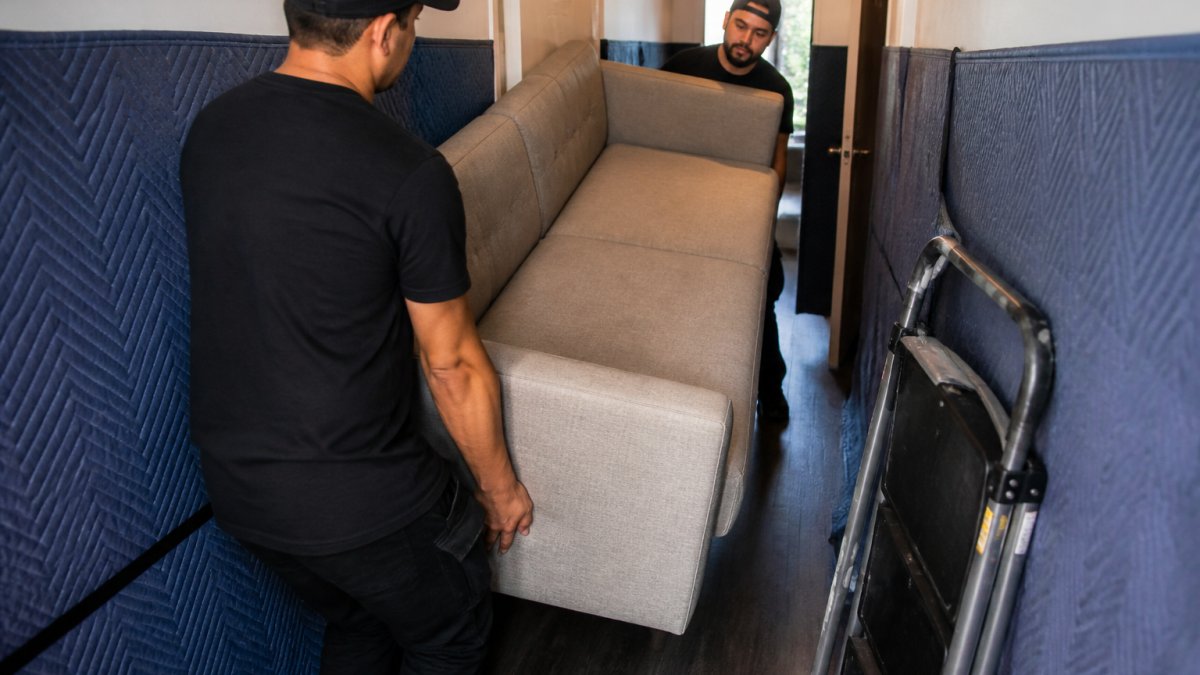
Tight spaces are where moves go wrong. The fix is arithmetic, not muscle: measure the whole path before moving day, then compare those numbers to the furniture's smallest passable dimension.
Measure the Path, Not Just the Doorway
Standard interior doorways run 30 to 36 inches wide, and a typical front door is 36 inches; bathroom and closet doors are often 24 to 28 inches.
Measure these points and write each one down:
- The narrowest doorway on the entire path (not just the front door)
- Hallway width at its tightest point, including any handrail or radiator that eats into it
- Stairwell width and the depth of each landing
A common pattern: a couch fits through the door upright but not at the angle needed to clear the hallway wall. Measure the diagonal clearance, then add two inches of buffer for padding and hands.
Removing Doors and Hardware
When a doorway is the bottleneck, the door itself is often easiest to remove. Most interior doors lift off their hinges once you pull the pins with a hammer and nail set or screwdriver. Label each door and its pins with painter's tape so you can rehang them the same day.
- Remove the door before you start, not mid-lift
- Take off door stops and any protruding hardware
- Cover the exposed hinge plates with tape so they do not snag blankets
- If a door frame has a raised threshold, measure over it, not around it
Stair Navigation Without Injury
Stairs are where most apartment-move injuries happen. The mechanics are simple: one person controls the top of the load, one controls the bottom, and the person at the bottom calls every step out loud. Never let the top person walk backward down a flight.
- Use a dolly on wide landings and flat runs; switch to lifting straps on the turns
- Keep the load tilted so the heavy end is closest to the person at the bottom
- Pause at every landing to reset your grip
- Never rush a turn; a controlled pivot beats a fast one every time
When the Piece Simply Will Not Fit
If the math says the piece will not clear, stop before you damage a wall or your back. Options, in order of preference:
- Disassemble further (remove legs, arms, or the back panel)
- Remove the door and any trim
- Hoist through a window or balcony with proper rigging and a spotter
- Hire a professional crew with the equipment and insurance to handle it
A short conversation with your building manager about elevator reservations, padding rules, and permitted move hours prevents most of these problems before they start.
Lifting Techniques That Protect Your Back
Good lifting form is the difference between a sore weekend and a back injury. The safest method keeps the load close and uses your legs to push up.
Follow these steps every time you lift:
- Stand close to the item with feet shoulder-width apart
- Bend at the knees, not the waist
- Grip the item firmly and keep it against your chest
- Tighten your core and push up with your legs
- Keep your back straight and turn with your feet, not your spine
The pivot technique matters: instead of twisting your torso, pivot your whole body by moving your feet. This one habit prevents most lifting injuries.
If an item is too heavy or awkward for two people, it is too heavy. Use a dolly, straps, or call for help. No piece of furniture is worth a back injury.
Occupational Safety and Health Administration guidance on safe lifting and materials handling
Protecting Furniture, Walls, and Floors in Transit
Protection is cheap; repairs are not. Wrap every surface that could scratch, pad every wall and floor corner along your path, and plan for after the truck is unloaded, where most guides stop and most damage claims begin.
Padding, Wrapping, and Loading
Use moving blankets for large pieces and bubble wrap for edges and corners. Shrink wrap holds drawers closed and blankets in place; lay floor protection in high-traffic areas.
In the truck, load heavy items first and against the wall. Distribute weight evenly and use securing straps and bungee cords so nothing shifts. Put fragile items on top and fill gaps so furniture cannot slide.
- Pad all corners and edges
- Wrap legs and arms separately
- Tape drawers and doors shut
- Load heavy items low and toward the front
An unsecured load shifts on the first hard turn. A sliding dresser can crush a lamp, crack a mirror, or hit you when you open the door.
Eco-Friendly Packing Alternatives
Plastic stretch wrap and bubble wrap are convenient but single-use, ending up in a landfill after every move. Reusable and household alternatives work just as well for most apartment furniture:
- Old towels, sheets, and blankets instead of bubble wrap for non-fragile surfaces
- Cardboard from broken-down boxes cut into corner guards
- Reusable moving blankets rented from a local moving supply shop
- Pillowcases and laundry baskets for small, awkward items
For high-value or antique pieces, do not substitute. Glass, marble, and heirloom wood need proper padding and often custom crating. The older and more irreplaceable the piece, the less you should improvise.
Post-Move Reassembly and Inspection
Most guides end at the truck, but the job is not done until the furniture is reassembled and inspected. Do this within 24 hours of arrival, while damage is fresh and easy to document.
- Unload in reverse order of loading so heavy items come out last
- Inspect each piece under good light before you reassemble it
- Photograph any scratches, cracks, or dents before you touch them
- Reattach hardware using the labeled bags from disassembly
- Tighten every bolt and screw, then check the piece for wobble
- Test drawers, doors, and hinges before you load them with anything
A common pattern: a dresser looks fine on arrival but has a cracked internal rail from a hard stop in the truck. Inspecting before you fill it saves you from discovering the problem when the drawer collapses.
Insurance and Liability for DIY Moves
This is the part almost no guide covers, and it matters most when something breaks. If you move your own furniture, your homeowner's or renter's policy may or may not cover in-transit damage.
Before you load the truck, do three things:
- Call your renter's or homeowner's insurer and ask specifically whether in-transit furniture damage is covered
- Ask whether your credit card offers any purchase or transit protection for the items you are moving
- If you hire movers, ask for their valuation coverage in writing before you sign
For professional moves that cross state lines, the Federal Motor Carrier Safety Administration sets rules for what movers must disclose and what your rights are if something goes wrong.
The cheapest protection is a five-minute phone call to your insurer before moving day. The most expensive mistake is assuming you are covered when you are not.
Federal Motor Carrier Safety Administration guidance on moving and your rights
When to Hire Professional Movers for Your Apartment Move
Hiring professional movers makes sense the moment the job involves stairs, a piano, an antique, or a deadline you cannot miss.
The math is simple: add the cost of a dolly, blankets, straps, and a rental truck, then add your time and the risk of damage.
This is where Curbside Movers fits.
If you are moving a high-value or antique piece, tell your movers in advance.
Federal Motor Carrier Safety Administration guidance on moving and your rights
Conclusion
Moving apartment furniture safely comes down to prep, the right tools, and knowing your limits. Measure first, disassemble what you can, and never lift more than your body can handle.
When a move involves stairs, heavy pieces, or a tight timeline, let the professionals take over. Curbside Movers offers background-checked movers, transparent upfront pricing, and easy app booking with $0 down.
Frequently Asked Questions
What supplies do I need to move apartment furniture safely?
You need moving blankets, plastic stretch wrap, packing tape, furniture sliders, a hand truck or moving dolly, and lifting straps. Bubble wrap protects glass and fragile surfaces, while corner protectors guard edges during transit. For disassembly, keep a labeled bag for screws and hardware. If you hire Curbside Movers, their team arrives with professional-grade equipment, so you only need to handle packing smaller items.
What is the safest way to lift heavy furniture?
Bend at your knees, keep your back straight, and lift with your legs while holding the load close to your body. Avoid twisting your torso, and pivot your feet instead. For items over 50 pounds, use a partner or lifting straps. If a piece is too heavy or awkward, a moving dolly reduces strain. Curbside Movers' background-checked professionals use ergonomic lifting techniques and proper equipment for every job.
How do I move furniture through narrow apartment hallways?
Measure the narrowest point of your hallway, doorway, and stairwell before moving day. Remove doors if needed to gain extra inches. Stand pieces upright and rotate them to fit tight corners, and use furniture sliders or a dolly for control. Protect walls with moving blankets taped in place. For complex tight-space moves, Curbside Movers handles the logistics so you avoid damage to walls and furniture.
What happens if my furniture gets damaged during a move?
If you hire professional movers, ask about their insurance coverage before booking. Curbside Movers offers transparent pricing and reliable service with careful handling, so always confirm liability details in advance. For DIY moves, your renters or homeowners insurance may cover transit damage. Document the condition of high-value items with photos before moving day, and keep receipts for anything antique or custom.