Last Updated: November 22, 2026
Quick Summary
To remove bed bugs upholstered furniture, isolate the piece on a hard floor, vacuum every seam and crevice with a crevice tool, then steam the fabric and frame slowly so the heat reaches the bugs and eggs. Finish by treating cracks and joints with a labeled bed bug product approved for upholstered furniture, and never spray the seating surface.
- Set the piece on a hard floor over a light-colored sheet so dropped bugs are easier to spot.
- Vacuum cushions on both sides, then run a crevice tool along every seam, fold, and zipper.
- Steam kills bugs and eggs on contact, but only where the heat actually reaches them.
- Check the care tag code: W means water-based cleaners are safe, S means solvent-based only, X means vacuum only.
- If live bugs remain after two full treatment cycles, stop treating and call a licensed pest professional.
Table of Contents
- Step-by-Step: How to Remove Bed Bugs from Upholstered Furniture
- Bed Bug Signs in Couches and Upholstered Furniture
- How to Steam a Couch for Bed Bugs
- How to Treat Bed Bugs in Furniture Safely
- How to Prevent Bed Bugs from Spreading During Furniture Treatment
- When to Call a Licensed Pest Professional
- Handling Vacuum Contents and Disposing of Infested Furniture
- Get a Quote for Safe Furniture Transport
- Frequently Asked Questions
Step-by-Step: How to Remove Bed Bugs from Upholstered Furniture
Bed bugs upholstered furniture hide in the seams, folds, and padding of couches, chairs, and other pieces.
Before you start, know what you're dealing with. Bed bugs are small, flat insects that feed on blood and shelter in dark gaps (the EPA).
Below, we'll show you exactly how to remove bed bugs from upholstered furniture, from the first inspection to safe disposal if treatment fails.
Step 1: Isolate the Furniture and Set Up Your Work Area
Move the piece away from walls and other furniture before you touch anything. This keeps bugs from crawling to new hiding places while you work.
Lay down a light-colored sheet or plastic tarp under the piece. Light colors make live bugs, shed skins, and fecal spots easier to spot.
If the piece came from a secondhand seller or a curb, you may want more detail on how to clean second hand upholstered furniture safely before you decide to keep it.
Step 2: Vacuum Every Crevice with a Crevice Tool
Vacuuming is your first real line of attack. A vacuum cleaner with a crevice tool pulls bugs, eggs, and debris out of seams, piping, folds, and tufting. Go slowly and press the tool into every gap.
Work in this order:
- Remove all cushions and vacuum them on both sides
- Run the crevice tool along every seam and fold
- Vacuum under the piece, along the frame, and around the legs
- Check zippers and labels, then vacuum inside if the cover opens
Seal the vacuum bag or empty the canister into a sealed plastic bag when you finish. We'll cover safe disposal later.
Step 3: Steam the Upholstery and Frame
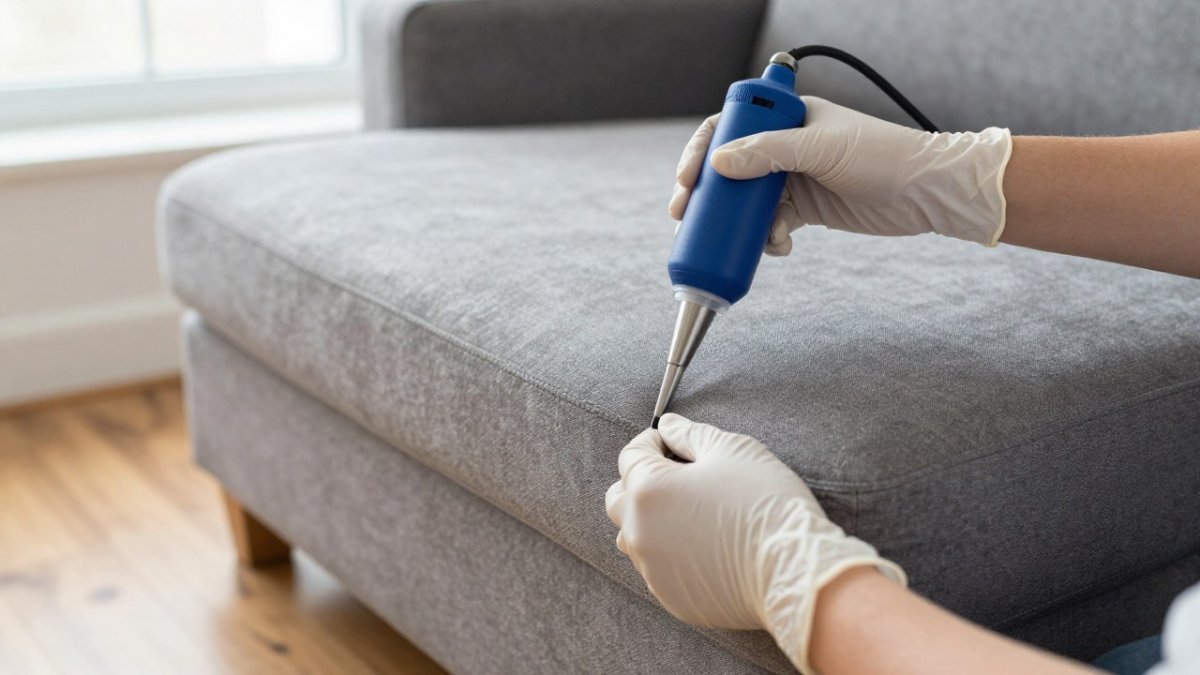
Steam kills bed bugs and their eggs on contact when the heat reaches them. A garment steamer or a steam cleaner with a fabric attachment works well. Move the steamer slowly over seams, tufting, and the frame, letting the heat soak in.
Steam is often considered a gentler option for many fabrics because it leaves no chemical residue. Test a hidden spot first to make sure the heat won't damage the material.
Step 4: Treat Cracks, Seams, and Hiding Places
After vacuuming and steaming, treat the remaining cracks and crevices. Use a labeled bed bug product approved for upholstered furniture, and follow the label exactly. Never spray the seating surface where people sit or sleep.
Pay attention to:
- Wooden frames and joints
- Under the piece and along the base
- Gaps where cushions meet the frame
- Folded fabric and skirted edges
Let treated areas dry fully before anyone uses the furniture again.
Bed Bug Signs in Couches and Upholstered Furniture
Bed bugs upholstered furniture signs include live bugs, rusty fecal spots, shed skins, and tiny white eggs tucked into seams and folds. Finding any of these means you should treat the piece and check nearby furniture too.
Here's what to look for during your furniture inspection:
- Live bugs: small, oval, reddish-brown insects in seams and tufting
- Fecal spots: dark rusty dots along piping and folds
- Shed skins: pale, hollow casings near hiding places
- Eggs: tiny white specks glued into cracks and crevices
- Bites: clusters on your skin after sitting on the piece
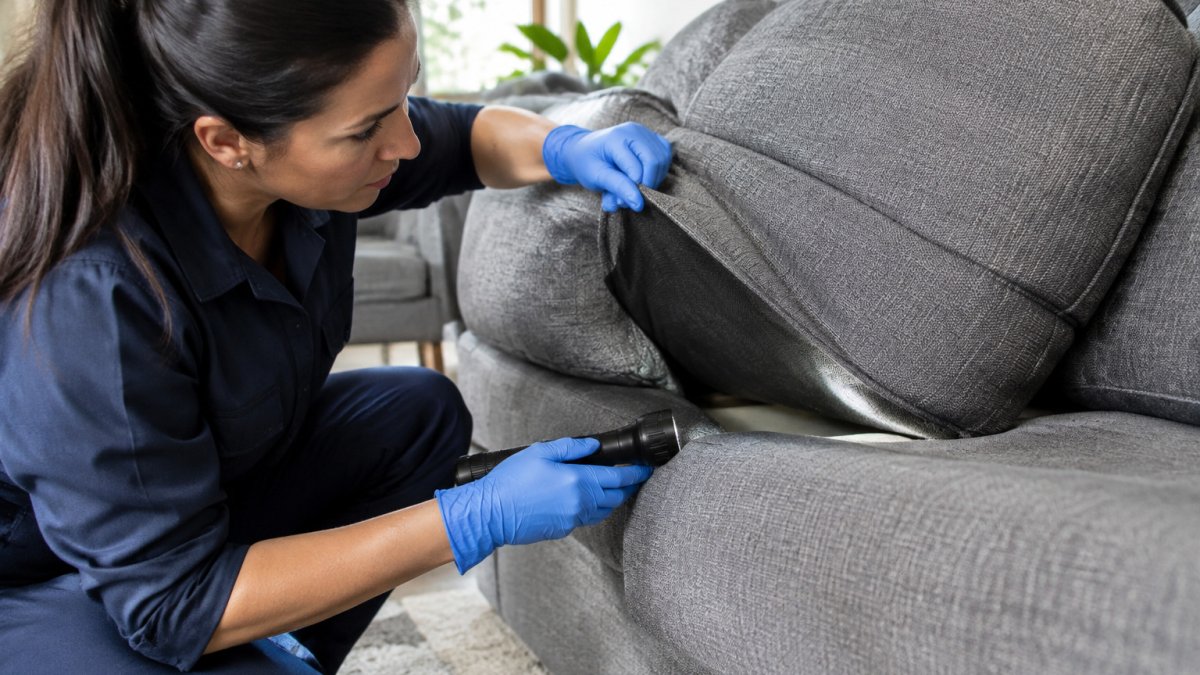
Check the undersides, zippers, labels, and the space between the frame and cushions. A bright flashlight and a dull knife help you flush bugs out of tight gaps.
How to Steam a Couch for Bed Bugs
To steam a couch for bed bugs, move the steamer slowly along every seam, fold, and tuft, holding the heat on each spot long enough to penetrate the fabric. Steam kills bugs and eggs on contact, but only where the heat actually reaches.
Follow this sequence:
- Remove and steam all cushions on both sides
- Steam the seams and piping along the back and arms
- Steam the deck under the cushions and the frame edges
- Steam the skirt and any folded fabric
- Recheck seams after the fabric dries
Watch out: steam can warp some wood frames and shrink certain fabrics. Test a hidden area first, and keep the steamer moving so no single spot overheats.
How to Treat Bed Bugs in Furniture Safely
To treat bed bugs in furniture safely, match the method to the fabric and construction before you touch a product or a steamer.
Start with the care label and a hidden spot test.
Use this decision guide before you treat:
- Delicate or unknown fabric, silk blends, or dry-clean-only covers: vacuum thoroughly, then use a low-moisture steamer held slightly off the surface, or call a professional. Skip sprays and wet cleaners.
- Cotton, linen, and most synthetic blends with a W or WS code: steam is usually safe, and a labeled upholstery product can be used on the frame and seams after a spot test.
- Leather, faux leather, and vinyl: vacuum seams and folds, wipe with a damp cloth, and avoid steam that can crack or discolor the surface. Treat the frame and crevices instead.
- Deep tufting, channel stitching, or a sealed frame: bugs can sit beyond the reach of steam and vacuum. Plan on professional treatment or discard.
- Antique or glued construction: heat and moisture can loosen joints and veneer. Use vacuuming and a labeled product on the frame, and keep steam moving.
If you are unsure whether a product is safe for your fabric, skip it and use vacuuming and steam instead.
Match the treatment method to the fabric and construction before you touch a product or a steamer.
| Fabric or construction | What to do | Key caution |
|---|---|---|
| Delicate, unknown, silk blends, dry-clean-only | Vacuum, low-moisture steamer held off surface, or pro | Skip sprays and wet cleaners |
| Cotton, linen, most synthetics with W or WS code | Steam usually safe; labeled product on frame and seams | Spot test first |
| Leather, faux leather, vinyl | Vacuum seams and folds, wipe with damp cloth | Avoid steam that can crack or discolor |
| Deep tufting, channel stitching, sealed frame | Plan on professional treatment or discard | Bugs sit beyond steam and vacuum reach |
| Antique or glued construction | Vacuum and labeled product on frame; keep steam moving | Heat and moisture can loosen joints and veneer |
How to Prevent Bed Bugs from Spreading During Furniture Treatment
To prevent bed bugs from spreading during furniture treatment, isolate the piece, treat the whole room in a fixed order, and verify the result over several weeks.
Work through the room in this sequence so you do not move bugs from a treated area back into a clean one:
- Isolate the furniture. Wrap the piece in plastic sheeting before moving it through the home, and keep it in one room until treatment is finished.
- Clear and bag nearby items. Remove throw pillows, blankets, slipcovers, and clothing from the area and seal them in bags before you vacuum.
- Treat the furniture first. Vacuum, steam, and treat the piece as described above, then seal vacuum contents in heavy plastic bags.
- Treat the surrounding room. Vacuum baseboards, floor edges, and the seams of nearby upholstered pieces, then steam or treat those seams the same way.
- Wash fabrics in hot water. Wash bedding, throws, and clothing on the hottest setting the fabric allows, then dry on high heat.
- Seal and remove waste last. Double-bag vacuum contents and debris, tie each bag closed, and take it straight to an outdoor bin.
Watch out: carrying cushions or vacuum bags through untreated rooms can drop bugs along the way, so bag items before you move them and treat one room at a time.
After treatment, verify rather than assume. Recheck the piece and the surrounding room every few days for the first two weeks, then weekly for another month.
If you still find live bugs after two full treatment cycles, or if bed bugs show up in bedrooms, closets, and other rooms, stop treating and call a licensed pest professional. Widespread activity, repeated sightings, or a piece with deep tufting or a sealed frame you cannot inspect are all signs that home treatment is not enough.
If you need to shift heavy pieces between rooms or apartments, safe handling matters. Our guide on moving heavy furniture between Bay Area apartments covers techniques that reduce the risk of spreading bugs as you move.
When to Call a Licensed Pest Professional
Call a licensed pest professional when you find bed bugs in multiple rooms, when treatment fails after two rounds, or when the infestation has spread into walls and flooring. A pro can confirm the species, choose the right products, and treat areas you can't reach.
Signs it's time to bring in help:
- You still see live bugs after two full treatment cycles
- Bed bugs show up in bedrooms, closets, and other rooms
- The piece has deep tufting or a sealed frame you can't inspect
- Someone in the home has severe reactions to bites
If DIY treatment isn't enough, you may also need help moving and handling the piece during treatment. Our professional moving services can transport furniture safely while you sort out the infestation.
Handling Vacuum Contents and Disposing of Infested Furniture
Dispose of vacuum contents and infested furniture by sealing everything in heavy plastic bags and removing it from the home promptly. Never dump vacuum contents into an open trash can indoors.
Follow these steps:
- Empty the canister or bag into a sealed plastic bag
- Double-bag it and tie each bag closed
- Take it straight to an outdoor bin
- Wipe down the vacuum and crevice tool afterward
If the furniture is too infested to save, don't drag it to the curb where bugs can spread. Our guide on how to dispose of old furniture quickly explains legal, fast ways to get rid of it without creating a new problem.
Get a Quote for Safe Furniture Transport
Moving infested or treated furniture is a job for careful hands.
Curbside Movers lets you book movers through a mobile app, and uses background-checked professionals with 15 years of moving experience in the Bay Area.
Ready to move a piece safely? Learn how to book a last-minute furniture pickup and get a clear quote before you commit.
Bed bugs in upholstered furniture are a hassle, but a steady, step-by-step approach gets you through it.
Frequently Asked Questions
How do you get bed bugs out of upholstered furniture?
Start by isolating the piece and vacuuming every seam, fold, and crevice with a crevice tool. Then steam the upholstery and frame, treat cracks and tufting, and bag the vacuum contents. Repeat inspection and treatment every few days until you see no live bugs, eggs, or fecal spots for at least two weeks. For severe infestations, call a licensed pest professional.
Can bed bugs live inside a couch?
Yes. Bed bugs hide deep inside couch cushions, seams, tufting, zippers, and the frame. They can survive for months without feeding, so a couch left unused can still harbor an infestation. Check undersides, labels, and piping closely, and remove cushions to inspect the deck and frame.
Can a steamer kill bed bugs in a sofa?
A steamer can kill bed bugs and eggs on contact if it reaches them with sufficient heat. Move the nozzle slowly over seams, folds, and tufting so the steam penetrates fabric layers. Steam alone may not reach deep inside the frame, so combine it with vacuuming and targeted treatment, and repeat after a few days.
Should you throw away a couch with bed bugs?
Dispose of a couch only if the infestation is severe or the furniture is badly damaged. Before discarding, vacuum and steam it, then seal it in plastic before moving it out to avoid spreading bed bugs. Never donate or resell infested furniture. For mild cases, professional treatment may save the piece.
