Last Updated: October 25, 2026
Quick Summary
To prepare furniture for a long-distance move, start with a written inventory, photograph existing damage, then clean, inspect, measure, and disassemble each piece. Empty every drawer, bag and label all hardware, and wrap items with moving blankets before adding stretch wrap as an outer layer only.
- Start packing furniture two to three weeks before your move date.
- Empty every drawer before movers arrive and remove drawers that lift out cleanly.
- Tape a labeled bag of hardware directly to the underside of each piece.
- Never store furniture directly on a concrete floor because concrete wicks moisture.
- Many movers limit or exclude coverage for items packed by the customer.
Table of Contents
- Start with a Furniture Inventory and Declutter Plan
- How to Protect Furniture When Moving: Cleaning, Inspection, and Supplies
- Measure Furniture and Map Your Access Route
- How to Disassemble Furniture for Moving Safely
- Should You Empty Dresser Drawers for Movers?
- How Far in Advance to Pack for a Move: A Realistic Timeline
- Furniture-Specific Packing Instructions and Transit Risks
- Book Your Furniture Move with Curbside Movers
- Frequently Asked Questions
Start with a Furniture Inventory and Declutter Plan
A furniture inventory is a written list of every piece you plan to move, its condition, and its dimensions. Build yours before you touch a roll of tape.
Walk room by room and note each item. Then ask three questions:
- Is it worth the cost of moving it?
- Does it fit the new space?
- Would replacing it cost less than moving it?
Anything that fails those tests should be sold, donated, or recycled. A long-distance move charges you by weight and volume, so every piece you cut saves money.
Document Existing Damage with Photos
Photograph every piece before packing. Shoot all sides, plus close-ups of scratches, dents, and loose joints.
These photos do two things. They prove pre-existing damage if a claim comes up later, and they give you a baseline for your own records.
Store the images in a cloud folder labeled by room. Add the date. If you're filing a damage claim after delivery, dated photos are the first thing a claims team asks for.
How to Protect Furniture When Moving: Cleaning, Inspection, and Supplies
Clean and dry each piece before you wrap it. Dirt trapped under a blanket can grind into finishes during transit, and moisture sealed inside plastic film can cause mildew on a multi-day haul.
Start with a full inspection. Check for:
- Wobbly legs and loose screws
- Cracked joints or split wood
- Torn upholstery seams
Tighten what you can and note what needs repair. For deeper lifting and floor-protection techniques, our guide on moving heavy furniture safely covers the physical side of handling bulky pieces.
Gather Moving Blankets, Stretch Wrap, and Corner Guards
A basic protection kit covers most furniture:
- Moving blankets and furniture pads for cushioning flat surfaces
- Stretch wrap to hold blankets in place and seal out dust
- Corner guards for table tops and cabinet edges
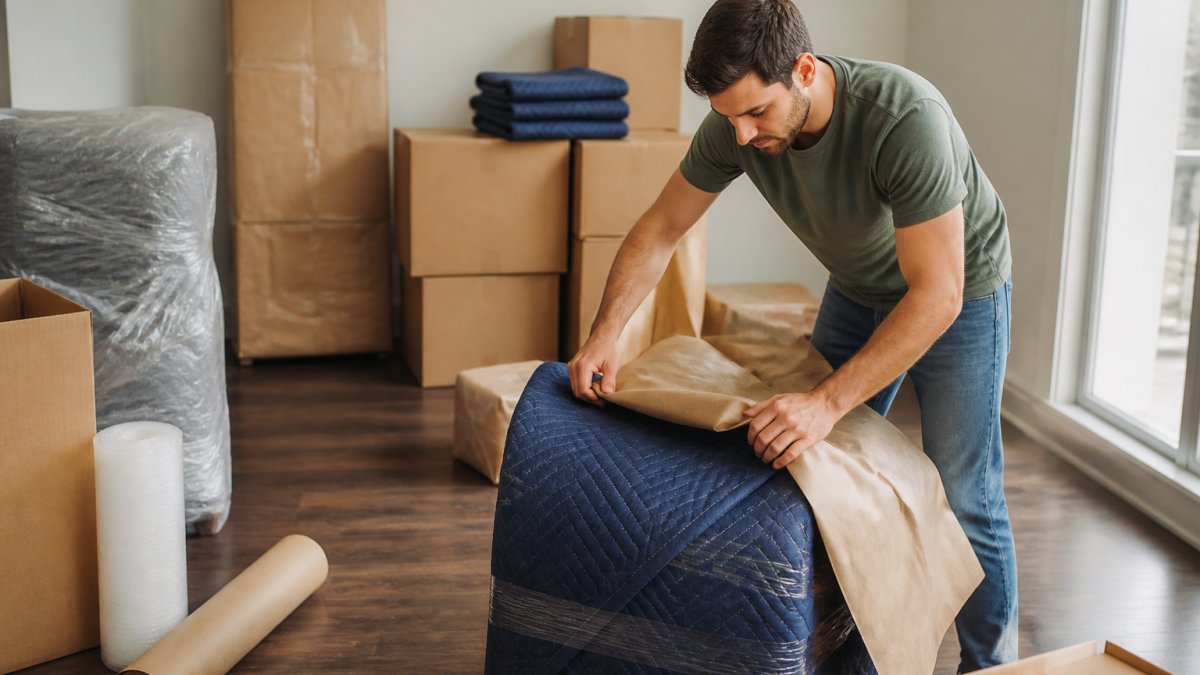
Wrap blankets around the piece, then stretch the plastic film tight. Pad corners first, since edges take the hardest hits during loading.
Measure Furniture and Map Your Access Route
Measure each piece, then measure every path it must travel: doorways, hallways, stairwells, and elevator doors. A sofa that clears the bedroom door may still fail the hallway turn.
Write down three numbers for each item: height, width, and depth. Then check them against your narrowest opening.
If a piece won't fit, you have options. Remove the legs, take off the doors, or disassemble it.
How to Disassemble Furniture for Moving Safely
Disassembly protects both the piece and your doorframes. Beds, desks, and large tables almost always travel better in parts, and they take up less space in the truck.
Follow this order:
- Take photos of the assembled piece first
- Remove drawers and shelves
- Label every screw, bolt, and bracket
- Store hardware in a sealed bag taped to the piece
- Keep the assembly instructions with the hardware
Skip disassembly on anything glued or structurally fragile. For a full walkthrough of tight-space techniques, see our guide on how to move apartment furniture safely.
Keep Hardware and Assembly Instructions Together
A common mistake is dropping loose screws into a junk drawer. By the time you unpack, half are missing.
Tape a labeled bag of hardware directly to the underside of each piece. Add the printed instructions or a photo of the assembled item. Reassembly then takes minutes instead of a hardware-store run.
Should You Empty Dresser Drawers for Movers?
Yes. Empty every drawer before movers arrive, and plan to remove the drawers themselves on any dresser where they lift out cleanly.
Full drawers cause three concrete problems. They add weight, which raises the per-piece load and can push a two-person carry into a three-person job. They strain the drawer slides and the frame, and a slide that was already sticky can fail under a full load. And they make the piece top-heavy, which raises the risk of tipping during loading and unloading.
Some movers will move a dresser with light clothing still inside as a courtesy, but that is not a standard and it is not something to count on. Ask your mover's policy in advance and get the answer in writing if the piece is valuable.
How to Empty and Prepare a Dresser
- Photograph the assembled piece and the drawer fronts before you touch anything.
- Empty each drawer completely, including the back corners where small items hide.
- Remove the drawers if they lift out; wrap each drawer front in a pad or cardboard and stack them separately.
- Bag the hardware, screws, brackets, drawer pulls, in a sealed bag and tape it to the underside of the piece.
- Tape the drawer openings shut on pieces where the drawers stay in place, so nothing slides out in transit.
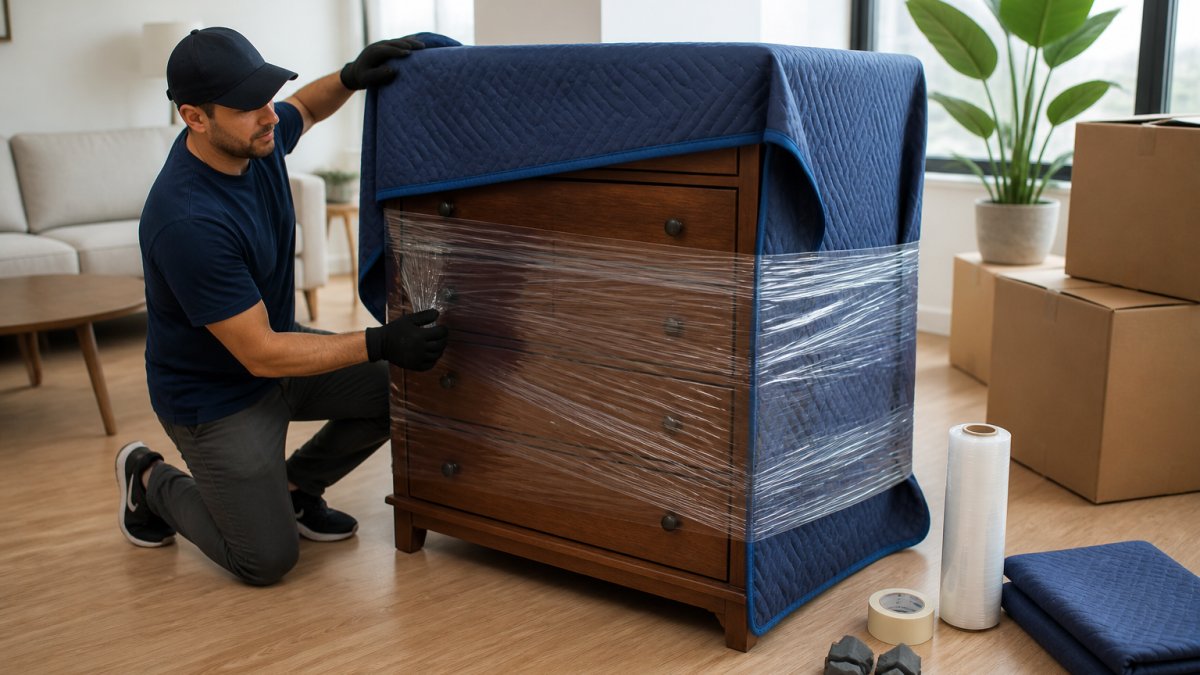
- Pad the top, corners, and bottom edge, then wrap with blankets and an outer layer of stretch wrap.
If the dresser is an antique or has veneer, skip the stretch wrap against the finish and follow the antique guidance above. If the drawers are stuck or the slides are damaged, note it on your inventory and photograph it before loading, a stuck drawer that arrives broken is a claim you want documented in advance.
How Far in Advance to Pack for a Move: A Realistic Timeline
Start packing furniture two to three weeks before your move date. That gives you time to gather supplies, disassemble pieces, and handle surprises without a last-minute scramble.
| Timeline | Task |
|---|---|
| 4 weeks out | Declutter, inventory, and photograph furniture |
| 3 weeks out | Order supplies; clean and inspect pieces |
| 2 weeks out | Disassemble and wrap non-essential furniture |
| 1 week out | Pack remaining items; confirm mover details |
| Move day | Final walkthrough and loading |
If you're packing an entire home, our packing and move-day prep guide lays out the full checklist.
Furniture-Specific Packing Instructions and Transit Risks
Generic blanket-wrapping gets a piece across town. A multi-day haul on a shared trailer is a different problem: vibration, stacked weight, humidity swings, and temperature changes work on furniture the entire time it is in transit. The pieces below need handling that goes beyond a pad and a strip of stretch wrap.
Sofas and Upholstered Seating
Vacuum the upholstery first, including under the cushions, so grit does not grind into the fabric under a pad. Remove loose cushions and wrap them separately; a cushion compressed under the frame for a thousand miles can lose its shape permanently. Pad the arms and the front rail, then wrap the whole piece in stretch wrap only as an outer layer over the pads.
Mattresses
A mattress needs a full encasement, not a blanket. Use a heavy-duty mattress bag (or two nested bags) and tape the seams so the cover does not peel open in the truck. Mattresses are the single most exposed item to dust, road grit, and moisture wicking up from a trailer floor, so keep them off the floor during loading and never lay one directly on bare trailer decking.
Dressers, Chests, and Case Goods
Empty every drawer (see the drawer section below), then remove the drawers if they lift out easily and wrap them separately. Tape the drawer fronts shut on pieces where the drawers stay in place. Pad the top and the corners, and run a strip of cardboard along the bottom edge, the base takes the scrape when a piece is slid across a truck floor.
Tables and Desks
Remove the legs and wrap them individually, taping the hardware bag to the underside of the top. Pad the tabletop on both faces and protect the corners with rigid corner guards, not just padding, a corner is where a dropped table lands. Glass-topped tables need the glass removed, taped in an X, wrapped in bubble wrap, and crated or boxed separately; never ship a glass top bolted to its frame.
Antiques and Veneered Pieces
Antiques and veneered furniture are the pieces most likely to be excluded from mover liability, so treat them as a separate project. Do not use stretch wrap directly against old finish, veneer, or inlay, the adhesive and the plastic can lift veneer and leave marks. Pad with clean moving blankets, secure with tape applied to the blanket rather than the wood, and use corner protection on every edge.
Glass-Front Cabinets, Mirrors, and China Cabinets
Remove glass shelves and doors where the hardware allows, wrap each pane in bubble wrap, and box them upright. Tape an X across any glass that stays in place, then pad the frame. Label the box "fragile, glass" on every side, and keep glass components in the cab of the truck or in a dedicated fragile crate rather than loose in the trailer.
Moisture, Temperature, and Storage Protection
Long-distance transit exposes furniture to humidity swings and temperature changes that a local move never does. Wood expands and contracts with moisture, leather can dry and crack in low humidity or grow mildew in high humidity, and upholstery picks up odors in a damp trailer. A few practical rules:
- Never store furniture directly on a concrete floor, concrete wicks moisture. Use pallets, blocks, or a vapor barrier.
- Use breathable covers (moving blankets, cotton sheets) for anything in storage longer than a few days. Plastic sheeting traps condensation.
- Avoid sealing wood in plastic for weeks at a time; wrap with blankets against the surface and use plastic only as an outer layer.
What Movers Will and Won't Cover
Preparation affects liability. Many moving companies limit or exclude coverage for items packed by the customer, for furniture that was not properly prepared, and for pre-existing damage. Before loading day, ask three questions in writing: what packing standards the mover requires, what valuation or liability coverage applies to self-packed furniture, and which items are excluded.
Book Your Furniture Move with Curbside Movers
Once your furniture is cleaned, measured, and wrapped, the last step is booking the move itself. That's where we come in.
Curbside Movers lets you book background-checked professionals in minutes through our app, with $0 down and transparent, upfront pricing, no hidden fees, ever.
You can book professional furniture movers online and manage the whole move from your phone. If you'd rather start with a quote, get a quote and see your price before you commit.
Frequently Asked Questions
How far in advance should you start packing for a move?
Begin packing non-essential items at least four to six weeks before your move date. Furniture preparation, including decluttering, cleaning, and disassembly, should start two to three weeks out. Reserve the final week for essentials and a walkthrough. If you hire professional movers, confirm their arrival window and any building elevator reservations at least two weeks ahead so your timeline stays realistic.
What is the most forgotten thing when moving?
Hardware for disassembled furniture is the most commonly misplaced item. Keep screws, bolts, and Allen wrenches in a labeled zip-top bag taped directly to the furniture piece or stored in a single hardware box. Other often-forgotten items include assembly instructions, corner guards, and stretch wrap. A simple packing checklist that lists each piece and its hardware prevents last-minute scrambles.
Are you supposed to empty dresser drawers for movers?
Yes, empty dresser drawers before movers arrive. Loaded drawers add significant weight, strain the drawer slides, and can cause the dresser to tip during transport. Remove all items, then secure drawers with stretch wrap or remove them entirely and pack them separately. If you are short on time, empty at least the top and bottom drawers and keep lightweight clothing in the middle, but full emptying is always safer.
How do you protect furniture during a long-distance move?
Clean and dry all surfaces first, then wrap each piece with moving blankets or furniture pads secured by stretch wrap. Use corner guards on edges and cardboard sheets for delicate surfaces like glass and mirrors. Disassemble large items where practical and bag the hardware. For upholstery, use plastic film or breathable covers to keep out moisture and dirt. Label every wrapped piece and photograph it before loading.
Preparing furniture for a long-distance move takes planning, but the payoff is furniture that arrives in one piece. If you want that work handled by a team that shows up on time and treats your belongings with care, Curbside Movers is ready. Book through our app with $0 down, transparent pricing, and background-checked professionals, and get your furniture move scheduled today.
