Last Updated: November 2, 2026
Quick Summary
To disassemble furniture for transport, take apart anything that won't clear a doorway or fit your vehicle fully assembled, and leave solid pieces intact. Work in a predictable order, bag and label all hardware, and photograph each piece before you start.
- Disassemble bed frames, large dining tables, desks, wide bookshelves and sectional sofas with unlatching connectors.
- Leave solid wood dressers, upholstered armchairs, small side tables and nightstands assembled.
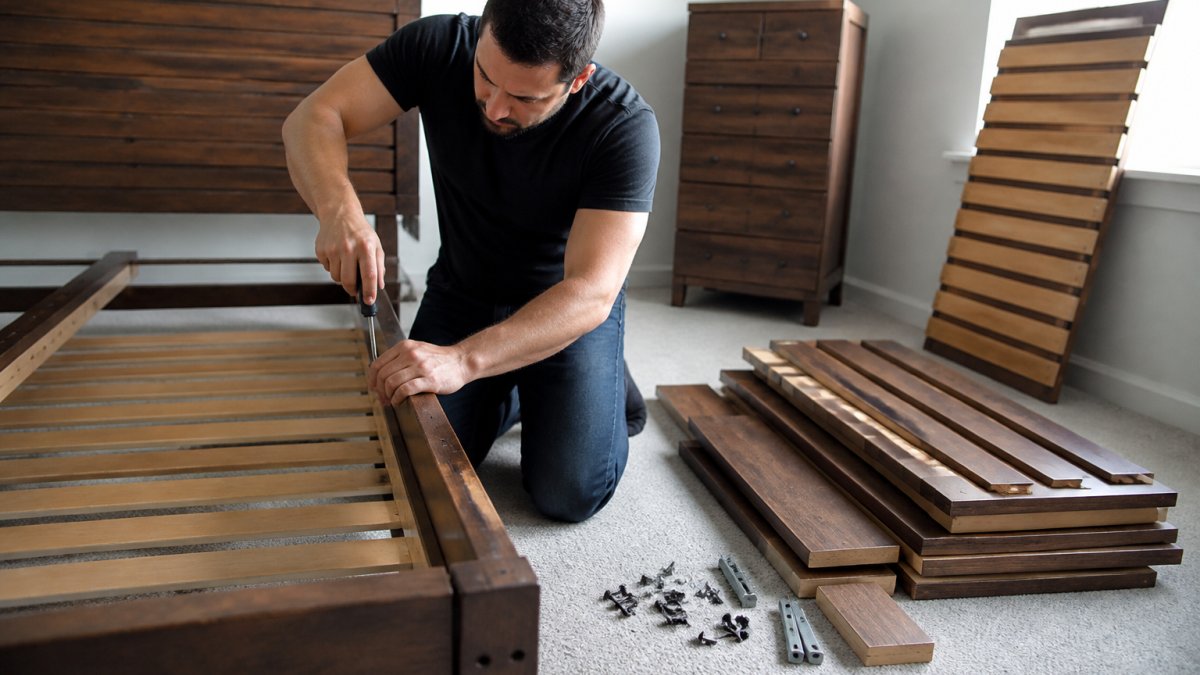
- Remove headboard and footboard bolts with a socket wrench, then detach side rails and pull the slats.
- Write a letter code on each part with masking tape and number matching hardware bags.
- Stand glass tops and mirrors upright, padded on both faces, and never lay them flat under cargo.
Table of Contents
- Deciding Whether to Disassemble Furniture Before Moving
- Tools for Furniture Disassembly: What to Gather First
- How to Take Apart a Bed Frame for Moving
- How to Label Furniture Parts for Reassembly
- How to Pack Furniture Parts for Moving
- Furniture-by-Furniture Disassembly Guide with Stop Points
- Safety and Injury Prevention During Furniture Disassembly
- Book Professional Help for Your Furniture Move
- Frequently Asked Questions
Deciding Whether to Disassemble Furniture Before Moving
Most furniture damage during a move happens because someone skipped the step to disassemble furniture, or took apart the wrong piece. A practical rule: disassemble anything that won't clear a doorway or fit your vehicle fully assembled. Leave the rest intact.
Here's the trade-off. Disassembly takes time and adds a reassembly step at the other end, but a bed frame that travels in one piece can arrive with a cracked rail or a bent bracket.
Disassemble these items:
- Bed frames and headboards
- Large dining tables with removable legs
- Desks with detachable tops
- Bookshelves wider than a standard doorway
- Sectional sofas with unlatching connectors
Leave these assembled:
- Solid wood dressers and chests
- Upholstered armchairs
- Small side tables
- Nightstands that fit through doorways
Watch out: forcing a bulky piece through a tight stairwell is how walls get gouged and backs get tweaked. Measure first, then decide. If the piece won't clear, take it apart.
Tools for Furniture Disassembly: What to Gather First
You need fewer tools than most guides suggest. A basic kit covers nearly every piece of furniture in a typical apartment.
Gather these before you start:
- Flathead and Phillips screwdrivers
- Allen key set (hex keys)
- Socket wrench with a small set of sockets
- Adjustable wrench
- Staple remover or pliers
- Zip-lock bags and masking tape
- Furniture sliders or a hand truck
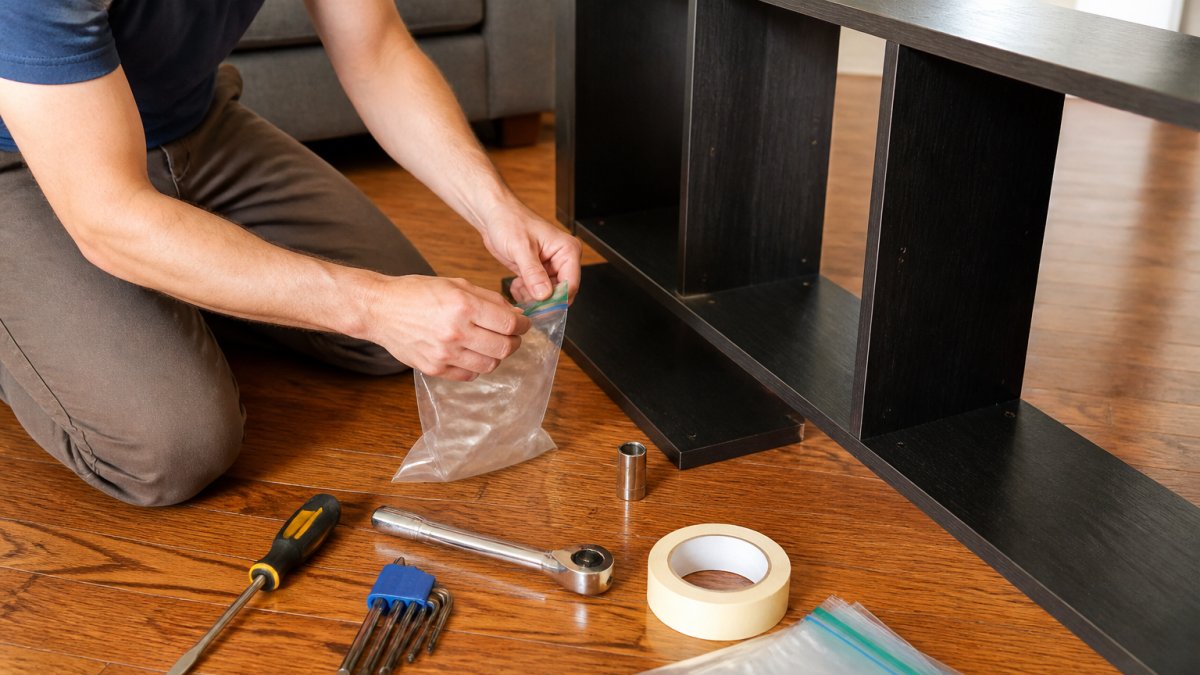
A common mistake is starting a job and discovering mid-way that the fasteners are hex-head, not Phillips. Sort your tools first. It saves a second trip to the hardware store.
Keep a small container for screws as you pull them. Loose hardware is the number one cause of reassembly headaches.
How to Take Apart a Bed Frame for Moving
Bed frames come apart in a predictable order. Follow it and you'll avoid stripping bolts.
- Strip the mattress and bedding, then set them aside.
- Remove the headboard and footboard bolts with a socket wrench.
- Detach the side rails from the frame brackets.
- Pull out the center support bar and slats.
- Bag all bolts and label the bag "bed frame."
If you want a deeper walkthrough on tight-space techniques and disassembly tools, our guide on how to move apartment furniture safely covers the full process.
Watch out: don't drag a disassembled rail across a hardwood floor. The metal bracket edges scratch. Carry each piece or slide it on a blanket.
How to Label Furniture Parts for Reassembly
Labeling is the step most people skip, and it's the one that saves the most time later. A simple system works better than a complicated one.
Use this method:
- Write a letter code on each part with masking tape (A, B, C for each piece of furniture).
- Number matching hardware bags to the part they belong to.
- Tape screws and bolts inside the bag, not loose.
- Photograph the assembled piece before you take it apart.
That last step matters. A quick phone photo of the underside of a table shows you exactly where each bracket goes. Reassembly becomes a matching game instead of a puzzle.
Keep all bags in one box labeled "hardware." Tape it shut so nothing spills in the truck.
How to Pack Furniture Parts for Moving
Loose parts need the same protection as the furniture itself, plus a loading plan so nothing shifts, scratches, or snaps in transit. For a step-by-step checklist covering inventory, cleaning, disassembly and protective wrapping, see how to prepare furniture for a long-distance move. Wrap, cushion, separate, then secure.
Pack parts like this:
- Wrap table legs and rails individually in moving blankets or bubble wrap, then tape the wrap closed so it doesn't unravel.
- Tape hardware bags directly to the part they belong to, not to the outside of the blanket where they can tear off.
- Keep glass tops and mirror panels upright and padded on both faces; never lay them flat with weight on top.
- Bundle long rails together and tape them as one unit so they don't flex and crack.
- Pad protruding bolts and bracket edges with cardboard or foam so they don't gouge adjacent pieces.
Loading Disassembled Parts in a Vehicle
The order you load matters as much as the wrap. A common pattern that works for vans, trucks, and trailers:
- Heaviest, flattest pieces first. Stand large panels, table tops, and headboards upright against the front wall of the cargo area, padded edges down. Upright panels resist bending; flat panels with weight on them crack.
- Long rails and legs next. Lay them along the floor or against a side wall, parallel to the direction of travel, so braking doesn't send them sliding forward.
- Glass and mirrors last, upright and isolated. Wedge them between padded furniture or strap them to a wall so they cannot tip. Never stack anything on top.
- Hardware box near the door. Keep the labeled hardware box accessible so you can hand it to whoever reassembles first.
Securing the Load
- Use ratchet straps or cam straps over padded contact points, not directly on finished wood.
- Fill gaps with blankets, cardboard, or empty boxes so pieces can't shift when you brake or turn.
- Check straps after the first few miles; loads settle and straps loosen.
- Keep the total load below your vehicle's payload rating, which you can find on the driver's door jamb sticker.
Load heavy, bulky pieces against the walls of the truck or van. Keep small parts in one box near the door so you can find them on arrival.
Furniture-by-Furniture Disassembly Guide with Stop Points
Each piece has a natural stopping point. Go past it and you risk damage or a reassembly job you can't finish.
| Furniture | What to Remove | Stop Point |
|---|---|---|
| Bed frame | Headboard, footboard, rails, slats | Stop at the frame; leave the box spring intact |
| Dining table | Legs, leaf extensions | Stop at the apron; don't separate the top from its frame |
| Computer desk | Legs, keyboard tray, monitor shelf | Stop at the drawer slides; leave them mounted |
| Bookshelf | Shelves, back panel | Stop at the frame; don't pry fixed joints |
| Sectional sofa | Connecting brackets between sections | Stop at the connectors; don't open the upholstery |
The stop point rule is simple: if a part is fastened with bolts or screws, it's meant to come off. If it's glued, stapled, or nailed into the frame, leave it. Forcing a fixed joint usually cracks the wood or splits the particle board.
Legs, rails, and glass tops are the removable parts you'll handle most. Everything else stays put.
Safety and Injury Prevention During Furniture Disassembly
Most moving injuries happen during lifting, but disassembly has its own hazards: pinch points, flying staples, and sudden releases when a bolt gives way. Treat the take-apart step as a physical job, not a quick chore.
Before You Start
- Clear the floor and set tools within reach so you aren't stepping over clutter.
- Wear gloves for splinters and sharp brackets, and safety glasses when prying staples or cutting wrap.
- Work in good light so you can see fasteners and avoid stripping heads.
- Have a partner for anything tall, heavy, or awkward; one person stabilizes while the other removes fasteners.
Injury Mechanisms to Watch
- Pinch points. Folding tables, sofa connectors, and bed brackets can snap shut on fingers when a bolt releases. Keep hands clear of hinge and bracket zones.
- Sudden release. A bolt under tension can let a rail drop or swing. Support the part before you remove the last fastener.
- Flying staples and splinters. Pry staples away from your body and wear eye protection.
- Awkward lifts. Lift with your legs, keep the load close, and don't twist. Ask for help on anything heavier than you can comfortably carry.
- Tool hazards. Keep tools off the floor where you'll step on them, and never leave a blade or pry bar edge-up.
A common mistake is rushing the last piece at the end of a long day. That's when backs get hurt and fingers get pinched. Slow down on the heavy items.
If a piece is too large or too awkward to move safely, that's your signal to call in help rather than push through. Our guide on moving heavy furniture safely covers practical lifting techniques and when to call professionals.
Book Professional Help for Your Furniture Move
Some jobs are worth handing off. If you're short on time, moving something heavy, or facing a tight stairwell, professional help can reduce the risk. Learn how to book professional furniture movers online with a step-by-step guide covering pricing, prep, and hidden fees.
Curbside Movers serves small to mid-size moves across the Bay Area. You can book background-checked professionals through our app, with $0 down and transparent, upfront pricing, with no hidden fees.
For pricing that depends on quantity, dates, and delivery details, check our pricing page or request a quote.
If you only need a hand with the heavy lifting, you can book on-demand help through our app when you need it.
Frequently Asked Questions
Should you disassemble furniture before moving it?
Disassembling furniture makes moving safer and easier for most large items. Beds, desks, and large tables often won't fit through doorways or around tight corners when fully assembled. Taking them apart reduces weight, prevents stress on joints during transport, and lowers the risk of damage to the piece and to walls. Small sturdy items like solid wood nightstands or simple chairs may not need disassembly. Check the manufacturer's instructions first; some pieces are not designed to be taken apart and doing so can void warranties or weaken the structure.
What tools do you need to disassemble furniture safely?
Basic hand tools cover most furniture disassembly: a flathead screwdriver, Phillips screwdriver, Allen key set, and socket wrench. Add a staple remover for upholstered pieces, zip-lock bags for hardware, and masking tape for labeling parts. A rubber mallet helps loosen stuck joints without damaging wood. Avoid power tools on delicate or antique furniture where torque can strip screws or crack veneer. Keep a small container nearby for loose screws and bolts so nothing rolls under furniture or gets lost during the move.
How do you keep furniture hardware from getting lost?
Place all screws, bolts, and fasteners from each piece into a separate zip-lock bag immediately after removal. Label the bag with the furniture name and the step or location the hardware belongs to, such as 'desk legs' or 'bed frame rails.' Tape the bag directly to the largest part of the disassembled furniture or pack it in a labeled box that travels with the furniture. Photograph the hardware layout before removal as a backup reference. This system prevents the frustration of arriving at your new place with a bag of unidentified screws.
Can you transport furniture without disassembling it?
Yes, some furniture can be moved fully assembled. Sofas, dressers, and sturdy chairs often fit through standard doorways and into a moving van without being taken apart. Measure the piece and the doorway or stairwell before deciding. If the item fits with a few inches to spare and is light enough for two people to carry safely, disassembly may not be worth the effort. However, large beds, sectional sofas, and oversize desks usually need to be broken down to avoid damage during loading and transport.
Disassembling furniture safely comes down to preparation, the right tools, and knowing when to stop. If the job feels bigger than your schedule allows, let us take it from here. Get started with Curbside Movers and move your furniture without the strain or the guesswork.
